
Power cuts don’t wait for a convenient time, and when they hit, most businesses and homeowners default to one question: solar or diesel? Both promise to keep the lights on, but the real difference shows up in cost, noise, maintenance, and how they hold up over years, not just during the next outage. Here’s an honest comparison to help you decide which backup makes more sense for your situation.
TABLE OF CONTENT
How Each System Actually Works
A diesel generator converts fuel into electricity through combustion, giving you instant power the moment it kicks in. A solar generator backup system works differently — it harnesses sunlight through photovoltaic panels and stores that energy in batteries, ready to use whenever the grid goes down. Both get you power during an outage, but how they get there couldn’t be more different.
The Real Cost Difference
This is where the comparison gets interesting. Diesel power in India typically runs ₹27–33 per unit once you factor in fuel, maintenance, and wear, with some 2026 estimates going as high as ₹36–40 per unit. A solar generator backup setup, on the other hand, costs roughly ₹3–8 per unit — making it 5 to 10 times cheaper over its lifetime. Diesel might look cheaper upfront, but the fuel bill catches up fast.
Noise, Maintenance, and Wear
Diesel generators are loud — 75 to 95 decibels, about the same as standing next to a highway. Solar systems, by contrast, run completely silent. Diesel units also wear out faster because of their moving mechanical parts, needing regular oil changes and filter replacements, while good lithium-ion batteries in a solar generator backup setup can last 10 to 20 years with very little upkeep.
Environmental and Financial Incentives
A solar generator backup produces zero emissions while it’s running, whereas diesel generators contribute directly to local air pollution — something increasingly hard to ignore for businesses today. On the financial side, switching to solar often unlocks government incentives and accelerated depreciation benefits. Some states also let you export surplus solar power back to the grid through net metering, an option diesel simply doesn’t offer.
Where Diesel Still Makes Sense
To be fair, diesel isn’t obsolete. It’s genuinely useful for very short-term projects, occasional high-power spikes, or situations where guaranteed instant power matters more than long-term cost — regardless of weather or sunlight availability. If you need backup for under three months, diesel often remains the more practical and cost-effective short-term choice.
Where Solar Generator Backup Wins (and the Hybrid Option)
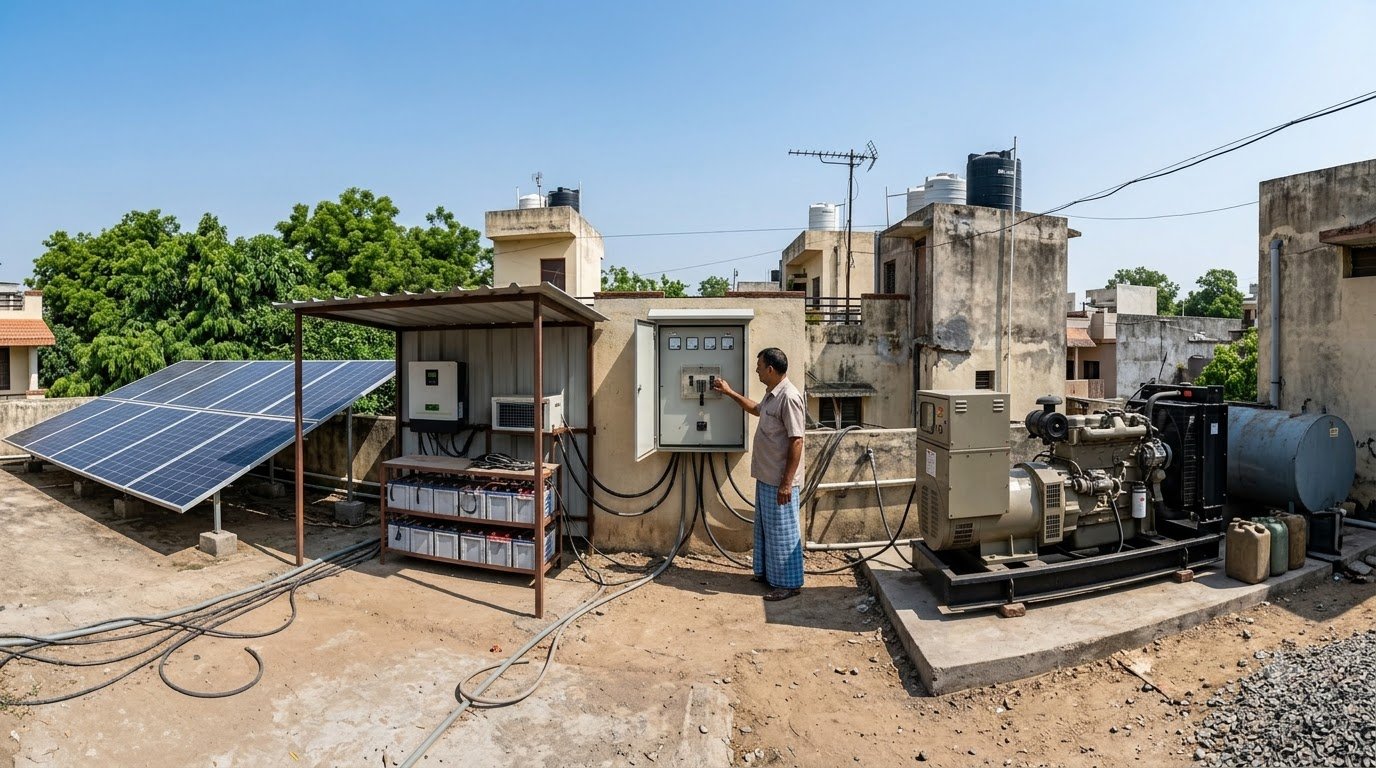
For anything medium-to-long-term, solar generator backup pulls ahead — especially in areas where diesel supply is unreliable, or where noise and emissions restrictions apply. Modern systems paired with batteries and inverters keep power steady even through cloudy days or after dark. And for businesses that can’t compromise on 24/7 uptime, a hybrid setup — solar covering most of the load with diesel stepping in only when needed — can cut fuel use by up to 80% without sacrificing reliability.
Conclusion
Choosing between solar and diesel really comes down to how long you need backup for and what you’re optimizing for — upfront cost, long-term savings, or guaranteed uptime. For most homes and businesses looking beyond the next few months, a solar generator backup setup ends up being the more financially and environmentally sound choice. If you’re weighing your backup power options, get in touch, for a system recommendation tailored to your actual power needs.