
If you’re considering solar, or already have panels on your roof, you’ve probably heard the “25-year” number thrown around a lot. But what does that actually mean in practice, and what happens once your system reaches that milestone? Here’s a honest look at real solar panel lifespan, what to expect as panels age, and what happens to them once they’ve truly run their course.
TABLE OF CONTENT
- What Does “25-Year Warranty” Actually Mean?
- How Fast Do Panels Actually Degrade?
- The Component People Forget: Inverters
- Signs It Might Be Time to Consider Replacement
- What Happens to Panels at the End of Their Life
- Where India Stands on Solar Recycling & Why Proper Disposal Matters
- Conclusion
- Frequently Asked Questions (FAQs)
What Does "25-Year Warranty" Actually Mean?
A 25-year warranty isn’t an expiry date — it’s a performance guarantee, promising your panels will still produce at least 80% of their original output by year 25. In practice, solar panel lifespan often stretches well beyond that number, with plenty of panels installed back in the 1990s and 2000s still generating usable power today. It’s a common misconception that panels simply stop working once the warranty period ends, and that assumption alone leads a lot of people to overestimate the urgency of replacement.
How Fast Do Panels Actually Degrade?
Rather than failing suddenly, panels lose output gradually — typically 0.3-0.8% per year, depending on quality and technology. Higher-quality monocrystalline panels tend to degrade slower, often retaining 88-92% of their output even after a full 25 years. Real Indian data backs this up too: a PVEL study across 36 domestic solar projects found systems in cooler regions degraded at nearly half the national average rate, which shows just how much local climate genuinely shapes solar panel lifespan.
The Component People Forget: Inverters
While panels themselves can easily last 25 years or more, inverters have a noticeably shorter working life — usually 10 to 15 years. Most solar systems will need at least one inverter replacement somewhere along the way, typically costing ₹20,000 to ₹40,000 depending on system size. Mounting structures and cabling, by comparison, generally hold up as long as the panels themselves without needing any replacement.
Signs It Might Be Time to Consider Replacement
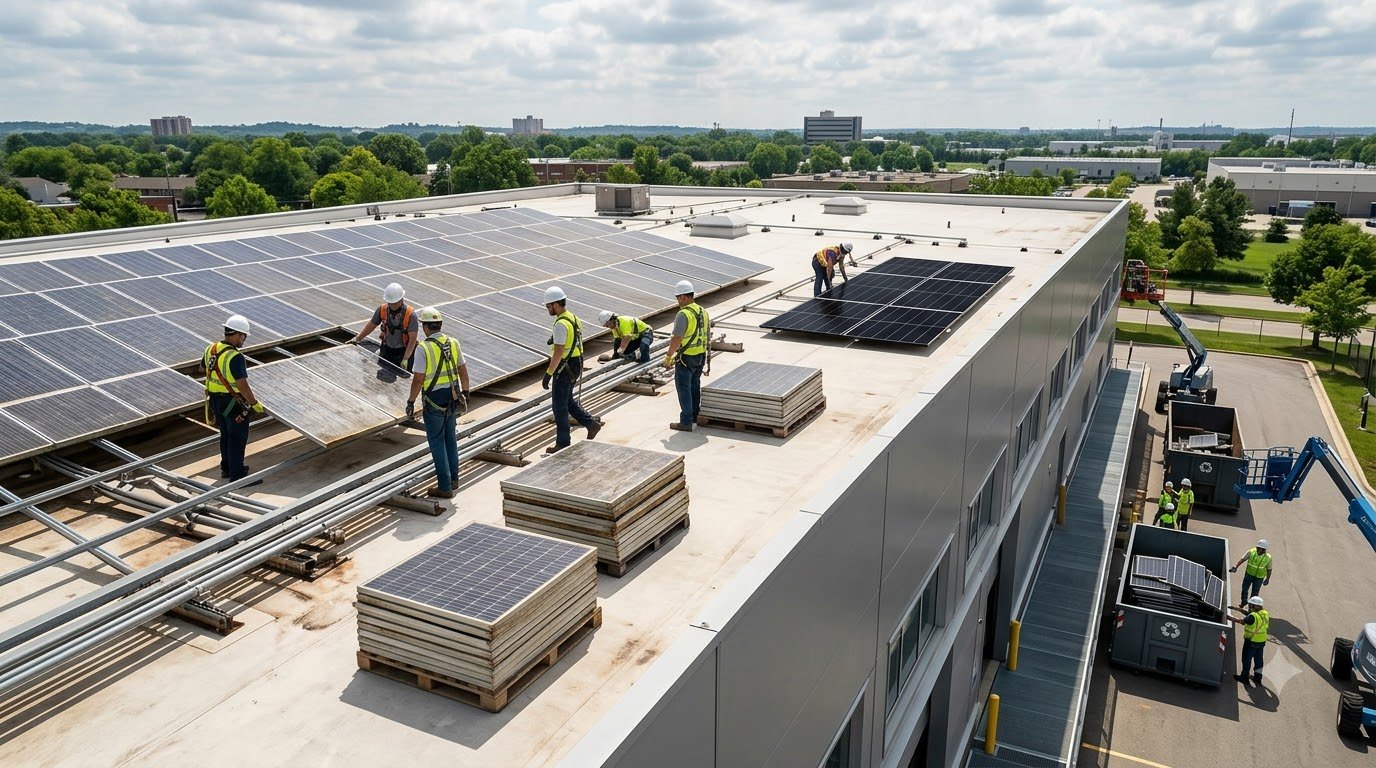
A handful of clear signals point to a panel genuinely nearing end-of-life: output dropping well beyond the expected degradation curve, visible cracking or delamination on the panel surface, or repeated inverter faults traced back to one specific module. Recognizing these early helps you tell the difference between normal aging and an actual issue worth addressing sooner rather than later.
What Happens to Panels at the End of Their Life
When panels do finally reach true end-of-life, they’re far from waste. Solar panels are made mostly of recoverable materials — silicon, glass, aluminum, copper, and a small amount of silver — nearly all of which can be reclaimed through recycling. Aluminum frames get melted down and reused in new panels, silicon wafers are re-refined into new cells, and copper or silver gets repurposed elsewhere in electronics manufacturing.
Where India Stands on Solar Recycling & Why Proper Disposal Matters
India’s formal recycling infrastructure for solar panels is still developing, though specialized recycling facilities are steadily emerging to handle the growing number of aging installations nationwide. MNRE is actively working on Extended Producer Responsibility guidelines that will eventually require manufacturers to run take-back programs for old panels, with wider, more structured recycling access expected by 2030. In the meantime, it’s worth knowing that older-generation panels can contain small amounts of heavy metals like cadmium or lead — which is exactly why they should never be tossed out as general waste, since improper disposal genuinely risks environmental contamination over time.
Conclusion
Understanding real solar panel lifespan changes how you think about your investment — it’s not a countdown to replacement, but a slow, predictable decline that still leaves you with meaningful power output decades in. From knowing when an inverter swap is due to understanding what happens to panels once they’re truly finished, a little planning goes a long way toward getting the most out of your system. If you’re curious about your current system’s expected lifespan or want a professional assessment as your panels age, reach out to our team for guidance.