You’ve made the switch. Solar panels are up on your roof, the inverter is humming, and your electricity bills are finally starting to look kinder. But here’s what most people don’t talk about after the installation: what comes next.
Solar panels are built to last, but “built to last” doesn’t mean “ignore and forget.” A little attention goes a long way. With the right solar maintenance habits, your system can perform at its peak for 25 years or more. Without them, efficiency quietly slips away and so does your return on investment.
This guide is your go-to resource for keeping your solar setup in top shape from the panels on your roof to the inverter on your wall and the battery backup that keeps the lights on.
TABLE OF CONTENT
- Why Solar Maintenance Is Non-Negotiable
- Know Your System Before You Maintain It
- Solar Panel Maintenance: The Basics Done Right
- Solar Inverter Maintenance
- UPS Maintenance: Don’t Wait for a Power Cut to Find Out It’s Dead
- Battery Care: Making Your Storage Last Longer
- PM Surya Ghar Muft Bijli Yojana: A Government Push You Should Know About
- Seasonal Maintenance: What Changes With the Weather
- Use Technology to Your Advantage: Monitor Your Output
- Your Solar Maintenance Checklist at a Glance
- Conclusion: A Little Effort Now Saves a Lot Later
- Frequently Asked Questions
Why Solar Maintenance Is Non-Negotiable
Think of your solar system like a car. You wouldn’t skip oil changes and expect the engine to run forever. The same logic applies here.
Over time, dust, bird droppings, fallen leaves, and grime build up on panel surfaces. In India especially, where dust levels are high and monsoon seasons can leave residue behind, this is a real concern. Even a thin layer of dust can reduce solar panel output by 15–25%.
Regular renewable energy maintenance isn’t just about cleanliness, it’s about protecting a long-term asset and making sure your system delivers what it promised.
Know Your System Before You Maintain It
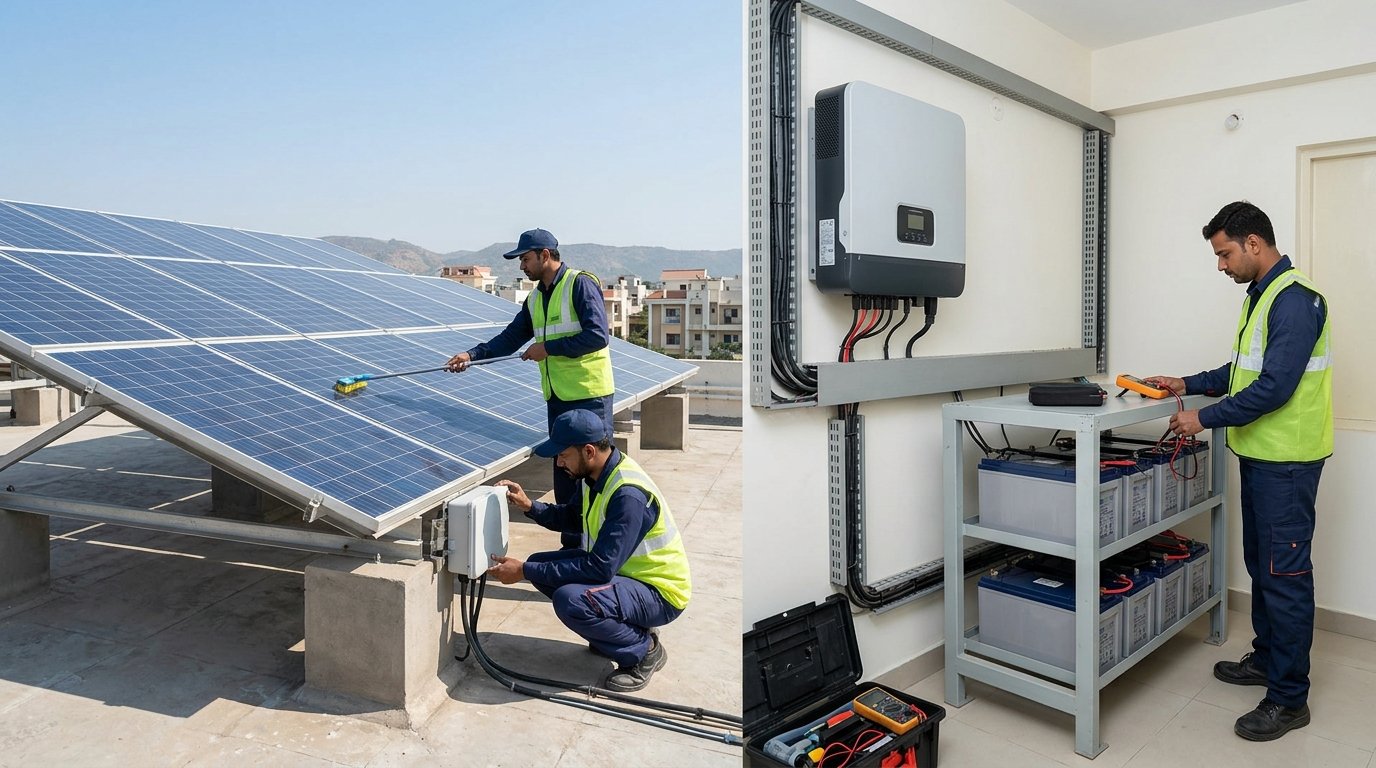
Before diving into maintenance tips, it helps to understand the three key components that need your attention:
1. Solar Panels
These are the workhorses absorbing sunlight and converting it into electricity. They’re designed to be durable, but they still need periodic solar panel maintenance to stay efficient.
2. Solar Inverter
The inverter converts the DC electricity from your panels into usable AC power for your home or business. Solar inverter maintenance is often overlooked but is critical, a faulty inverter can silently drag down your entire system’s output.
3. UPS and Batteries
For off-grid and hybrid systems, batteries store the energy generated. UPS maintenance ensures that your backup power system is ready when the grid fails and that your batteries aren’t silently degrading.
Solar Panel Maintenance: The Basics Done Right
Cleaning is More Important Than You Think
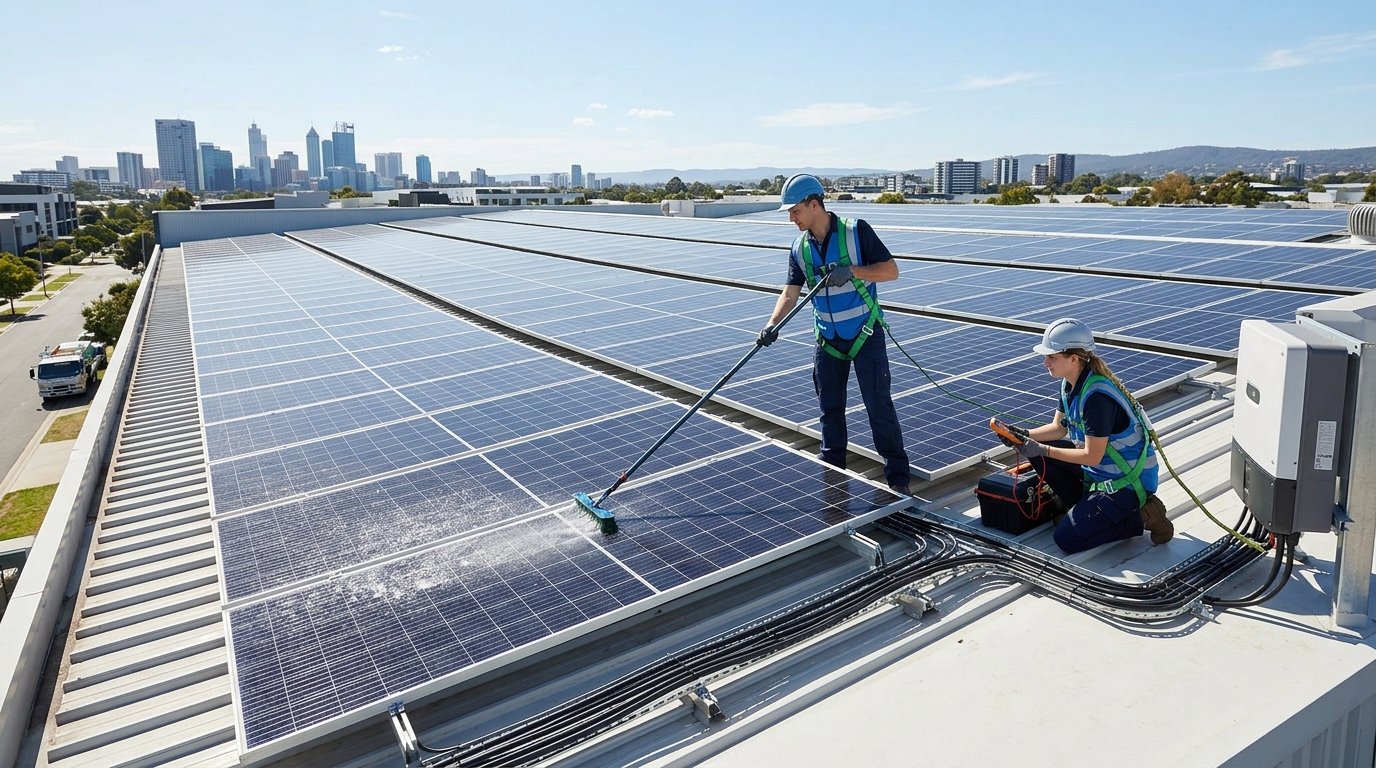
In dusty cities and semi-urban areas of India, panels should ideally be cleaned every 2 weeks. In greener, cleaner environments, once a month is sufficient.
How to clean correctly:
- Use soft brushes or a gentle hose wash — no high-pressure jets
- Clean early morning or evening to avoid thermal shock on hot panels
- Avoid abrasive materials or harsh chemical cleaners
- For large rooftop installations, consider professional cleaning services
Visual Inspections You Should Do Regularly
A quick visual check every month can catch problems early. Look out for:
- Cracks or chips on the panel surface
- Discoloured patches (hotspots) — signs of cell damage
- Loose mounting brackets or frames
- Bird nests or debris accumulation beneath panels
- Loose or exposed wiring
Tilt, Shade, and Orientation
Panels in India perform best when tilted at an angle roughly matching your latitude and facing south. Check every 6 months that nearby trees haven’t grown to cast new shadows. Even partial shading on one panel can reduce the output of your entire string.
Solar Inverter Maintenance
Most people pay zero attention to the inverter once it’s installed. That’s a mistake.
Monthly Checks for Your Inverter
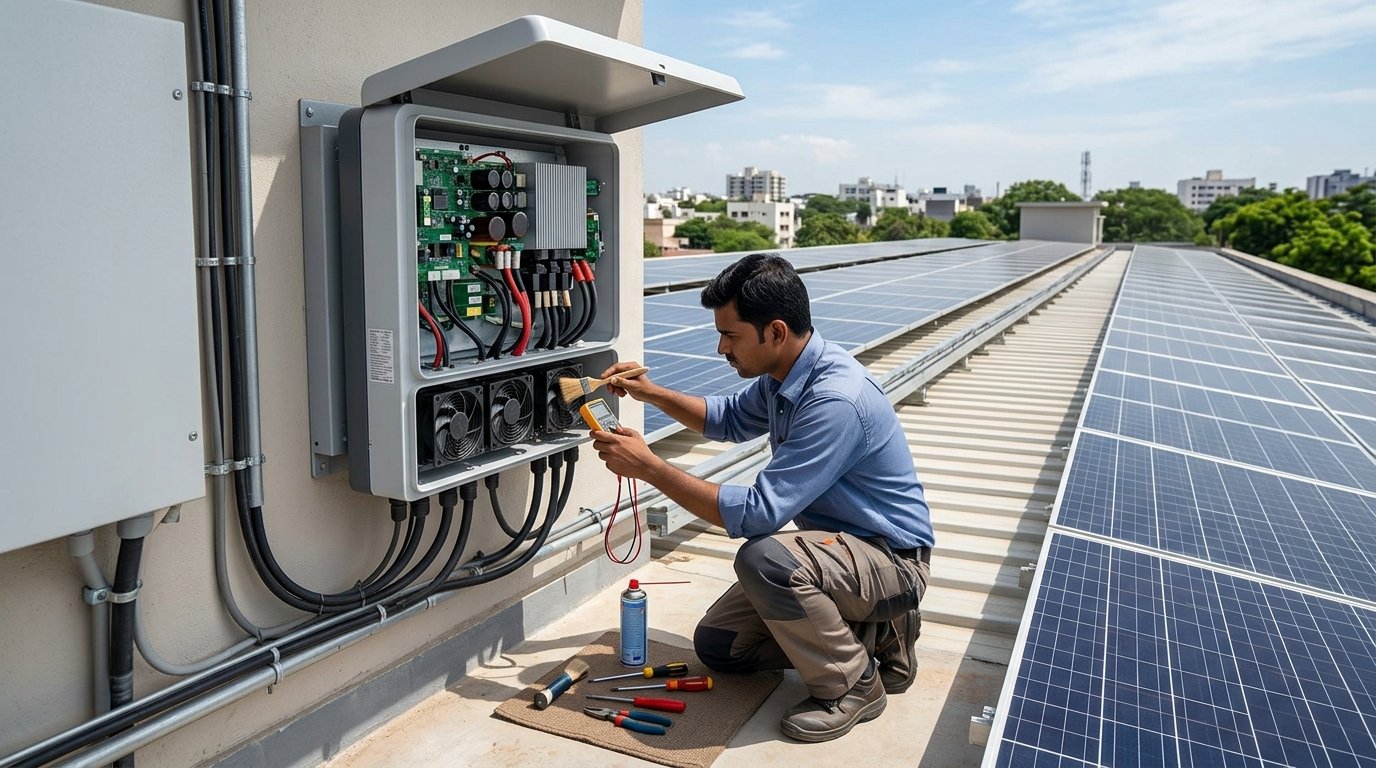
- Check the display panel — most modern inverters show fault codes or warnings
- Verify that the daily energy output figures are consistent with past readings
- Listen for any unusual sounds (buzzing, clicking, or humming that wasn’t there before)
- Make sure ventilation around the inverter is clear inverters generate heat
Annual Inverter Service
Once a year, have a qualified technician inspect the inverter. They’ll check internal connections, firmware updates, and efficiency readings. This is also the time to verify that your inverter’s capacity still matches your system’s output especially if you’ve expanded your panel count.
A well-maintained inverter can last 10–15 years. Neglected ones can fail much sooner — often right when you need them most.
UPS Maintenance: Don't Wait for a Power Cut to Find Out It's Dead
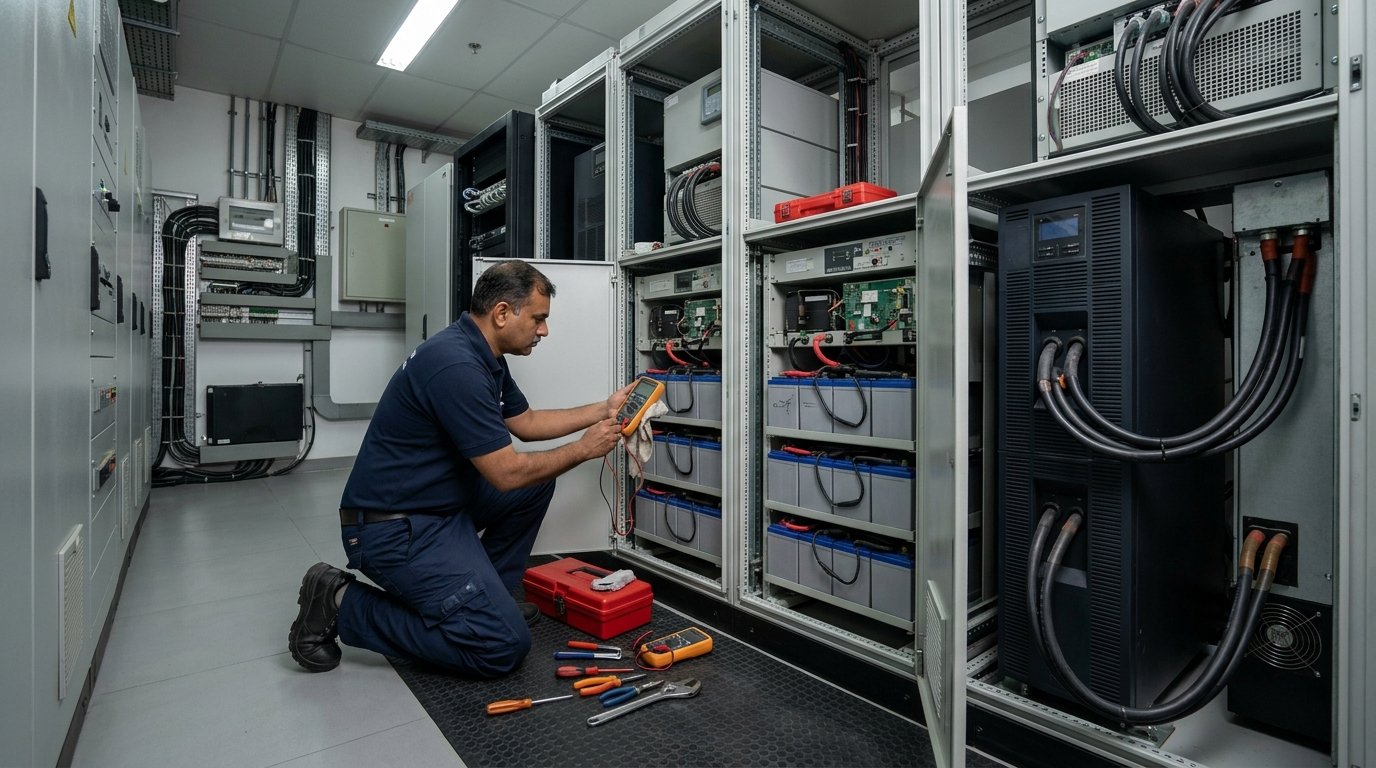
A UPS (Uninterruptible Power Supply) is your last line of defence during outages. Whether it’s protecting your computers, medical equipment, or home appliances, UPS maintenance is something you simply cannot skip.
Key UPS Maintenance Habits
- Test your UPS backup time every 3 months — simulate a power cut and time how long it lasts
- Keep the unit in a cool, ventilated area away from direct sunlight
- Check battery terminals for corrosion or swelling
- Replace batteries every 3–5 years, even if they appear to work they degrade silently
- Keep the UPS firmware updated if it’s a smart/networked unit
Battery Care: Making Your Storage Last Longer
For solar systems with battery storage — especially off-grid and hybrid setups — your batteries are as important as the panels themselves.
Battery Care: Making Your Storage Last Longer
- Deep discharging repeatedly (draining past 20% regularly)
- Overcharging which is why a quality charge controller matters
- Extreme heat or cold batteries hate temperature extremes
- Long periods of inactivity without a maintenance charge
Good solar maintenance includes checking battery voltage levels monthly, cleaning terminals, and ensuring proper ventilation around the battery bank. A well-maintained battery bank can last 5–10 years; a neglected one might give up in 2–3.
PM Surya Ghar Muft Bijli Yojana: A Government Push You Should Know About
If you’re a homeowner in India considering solar, the PM Surya Ghar Muft Bijli Yojana is one of the most significant residential solar initiatives in the country’s history. Launched by the Government of India, this scheme subsidises rooftop solar installations for households, aiming to make clean energy accessible across the country.
Under this scheme, eligible households can get up to 300 units of free electricity per month through subsidised rooftop solar systems. This not only cuts electricity bills dramatically but also makes solar adoption more financially viable for middle-income families.
If you’ve installed your system under this scheme, regular solar panel maintenance becomes even more important. You’re making the most of a government-subsidised asset that’s meant to deliver long-term savings.
Seasonal Maintenance: What Changes With the Weather
Before Monsoon Season
- Inspect all wiring connections and ensure weatherproofing is intact
- Check the junction box for any water ingress risk
- Clean panels thoroughly before the rains begin
After Monsoon Season
- Clean off any residue left by rainwater especially if your area has hard water
- Check for any physical damage caused by storms or fallen branches
- Inspect the mounting structure for rust or loosening
Summer Care
- Ensure adequate airflow beneath panels to prevent overheating
- Check inverter cooling fans dust clogs them quickly in summer
Use Technology to Your Advantage: Monitor Your Output
Most modern solar inverters come with a companion app or web portal. Use it daily. Monitoring your energy output takes less than two minutes and is the single best early-warning system you have.
What to watch for:
- Sudden drops in daily generation compared to previous days with similar weather
- One string or panel consistently underperforming compared to others
- Error codes or fault alerts on the inverter dashboard
- Battery not reaching full charge despite good sunlight
Your Solar Maintenance Checklist at a Glance
Your Solar Maintenance Checklist at a Glance
- Clean solar panels (bi-weekly in dusty areas)
- Visual inspection for cracks, hotspots, or loose wiring
- Check inverter output readings
- Check battery voltage levels
- Trim any new shade-causing vegetation
Every 3 Months
- Test UPS backup time
- Check battery terminals for corrosion
- Review energy generation trends from inverter app
Annually
- Professional inspection of the entire system
- Inverter servicing and firmware check
- Mounting structure integrity check
- Review panel tilt and orientation
Conclusion: A Little Effort Now Saves a Lot Later
Solar energy is one of the smartest investments you can make — financially and environmentally. But the return on that investment is directly tied to how well you maintain the system.
From solar maintenance routines that take minutes a month, to annual professional check-ups that keep your inverter and batteries in shape, every step you take adds years to your system’s productive life.
Whether you’re running a residential setup, a commercial array, or a fully off-grid system, the fundamentals remain the same: keep it clean, keep it monitored, and act on problems early.
Need help with your solar setup, inverter servicing, or battery solutions? Explore reliable solar power solutions that are built to last.