Rooftop solar has never been more affordable for Indian households, thanks to a scheme that puts real money directly into your bank account. If you’ve been putting off going solar because of the upfront cost, understanding the solar subsidy 2026 structure could change that decision entirely. Here’s everything you need to know about eligibility, amounts, and how to actually get the subsidy without delays.
TABLE OF CONTENT
- What Is PM Surya Ghar Yojana?
- Solar Subsidy 2026: How Much You Actually Get
- Who’s Eligible & What Equipment Qualifies
- Step-by-Step Application Process
- How Long Until the Subsidy Arrives
- Common Mistakes That Delay or Reject Applications
- Is the Solar Subsidy 2026 Worth It?
- Conclusion
- Frequently Asked Questions (FAQs)
What Is PM Surya Ghar Yojana?
PM Surya Ghar Muft Bijli Yojana is a central government scheme launched in February 2024 to promote rooftop solar adoption across the country. It’s run by the Ministry of New and Renewable Energy, with a budget allocation of roughly ₹75,000 crore behind it. The scheme is targeting 1 crore solarised homes by 2027, and has already crossed 40 lakh installations as of mid-2026 — making it one of the most active subsidy programs in the country right now.
Solar Subsidy 2026: How Much You Actually Get
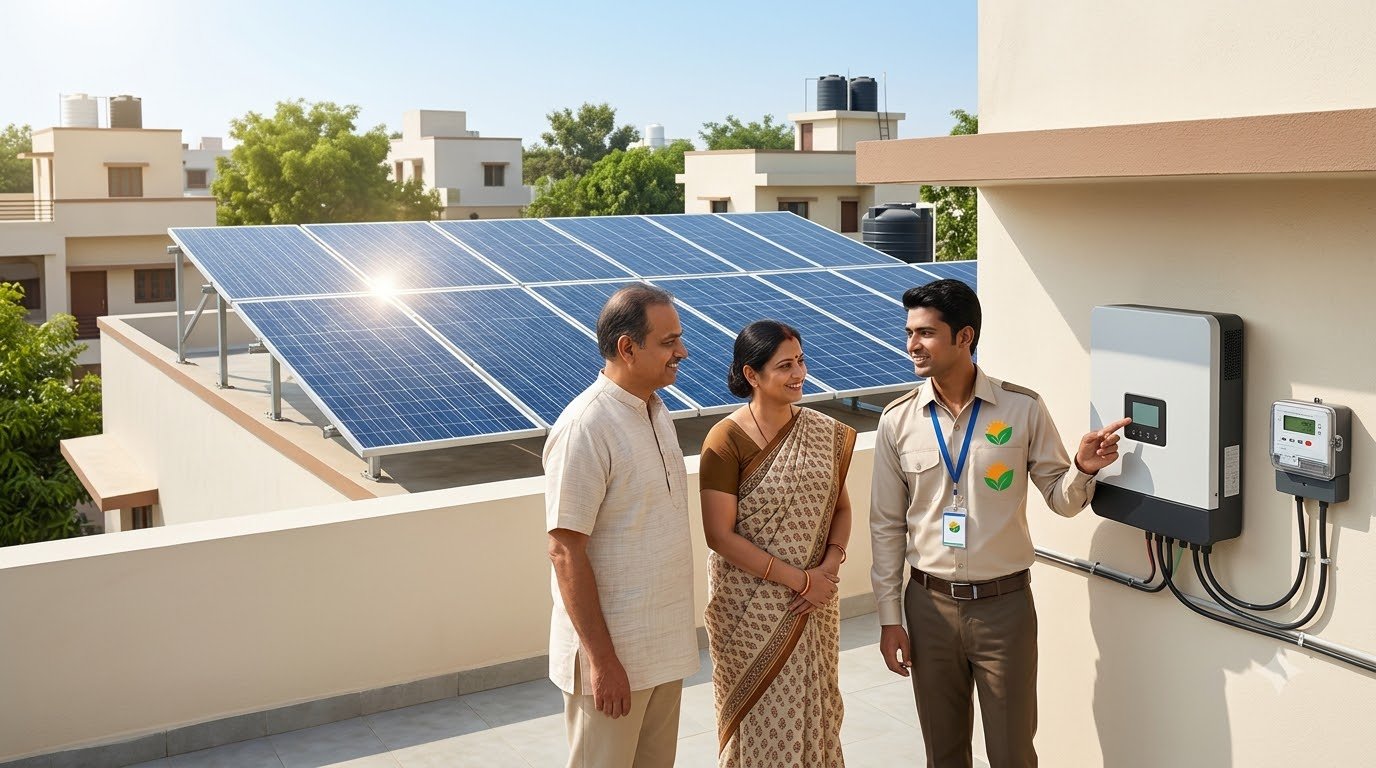
The solar subsidy 2026 amount is tiered based on your system size. A 1 kW system gets you ₹30,000, a 2 kW system gets ₹60,000, and any system of 3 kW or above gets the maximum ₹78,000 subsidy. Most households end up choosing a 3 kW system since that’s generally enough to cover around 300 units of monthly electricity consumption, making it the most commonly claimed subsidy tier.
Who's Eligible & What Equipment Qualifies
To qualify for the solar subsidy 2026, your home needs a residential electricity connection with a sanctioned load of 10 kW or below. Equipment matters too — panels must be ALMM-listed, and starting June 2026, they also need to use domestically manufactured solar cells. This equipment requirement trips up a lot of first-time applicants, so it’s worth confirming with your installer before signing anything.
Step-by-Step Application Process
Everything runs through the official PM Surya Ghar national portal. You start by registering with your state, DISCOM name, consumer number, and mobile number, then wait for technical approval before choosing a government-registered installer. Once the system is installed, you’ll need to apply for net metering separately with your local electricity provider before uploading final documents to receive your subsidy via direct bank transfer.
How Long Until the Subsidy Arrives
The official timeline is 30 working days from system commissioning to subsidy credit, but real-world experience varies a lot by state. Some states process this smoothly and on time, while others like Uttar Pradesh and Madhya Pradesh can realistically take 3 to 5 months. If your subsidy hasn’t arrived within 90 days, there’s a clear escalation path — starting with your DISCOM’s grievance cell, then the MNRE helpline, and finally CPGRAMS if the issue still isn’t resolved.
Common Mistakes That Delay or Reject Applications
A lot of people assume this scheme covers the entire cost of going solar — it doesn’t. The subsidy amount is based on MNRE’s fixed benchmark cost, not whatever price your installer quotes you, so a higher quote doesn’t get you a higher subsidy. Using non-ALMM-listed panels or making small errors during the online application process are also common reasons applications get stuck or rejected outright, so it pays to double-check every detail before submitting.
Is the Solar Subsidy 2026 Worth It?
Beyond the upfront subsidy, beneficiaries also get access to collateral-free bank loans at concessional interest rates to cover whatever’s left of the system cost. States like Maharashtra, Gujarat, and Uttar Pradesh are already leading the way in adoption, which says a lot about how genuinely affordable this scheme has made solar for ordinary households — not just in theory, but in real numbers on the ground.
Conclusion
The solar subsidy 2026 program has made rooftop solar more accessible than it’s ever been, but only if you understand the tiers, eligibility rules, and paperwork that actually get your money released on time. From choosing the right system size to avoiding the common application mistakes that cause delays, a little preparation goes a long way here. If you’re ready to explore what this subsidy could mean for your home, reach out to our team and we’ll walk you through it step by step.