
If you’re considering solar or already have panels on your roof, monsoon season probably raises a few doubts. Will your system still generate power once the clouds roll in, and does rain actually damage the panels? Here’s what really happens to a solar panel in rainy season, and how to keep your system performing well through the monsoon.
TABLE OF CONTENT
Do Solar Panels Actually Work in Rain?
Yes — a solar panel in the rainy season doesn’t stop working, because panels run on sunlight, not heat. Even under heavy cloud cover, enough diffused light filters through to keep your system generating electricity. Output drops during monsoon, but your panels never go completely dark.
How Much Does Output Really Drop?
On average, a solar panel in the rainy season produces around 40% of what it would on a clear, sunny day. A 5 kW system that usually generates about 20 units daily might still produce 5–7 units during a heavy downpour. It’s a real dip, but far from a total shutdown.
The Hidden Benefit: Rain as a Natural Cleaner
Monsoon rain isn’t purely a downside for your solar panel in rainy season performance — it also washes away dust, pollen, and bird droppings that build up during drier months. Many homeowners notice better output once the rains clear, simply because their panels are cleaner. Cooler temperatures during rain can help too, since panels actually lose some efficiency in extreme heat above 35–40°C.
Where the Real Monsoon Risks Actually Are
The real concern for a solar panel in the rainy season isn’t sunlight at all — it’s water getting into places it shouldn’t, like junction boxes, wiring, or inverter connections. Poor sealing, loose cables, or corroded mounting hardware are usually what causes issues during prolonged heavy rain, not the panels themselves. This is exactly why proper installation and waterproofing matter more than panel quality alone.
Pre-Monsoon Inspection Checklist
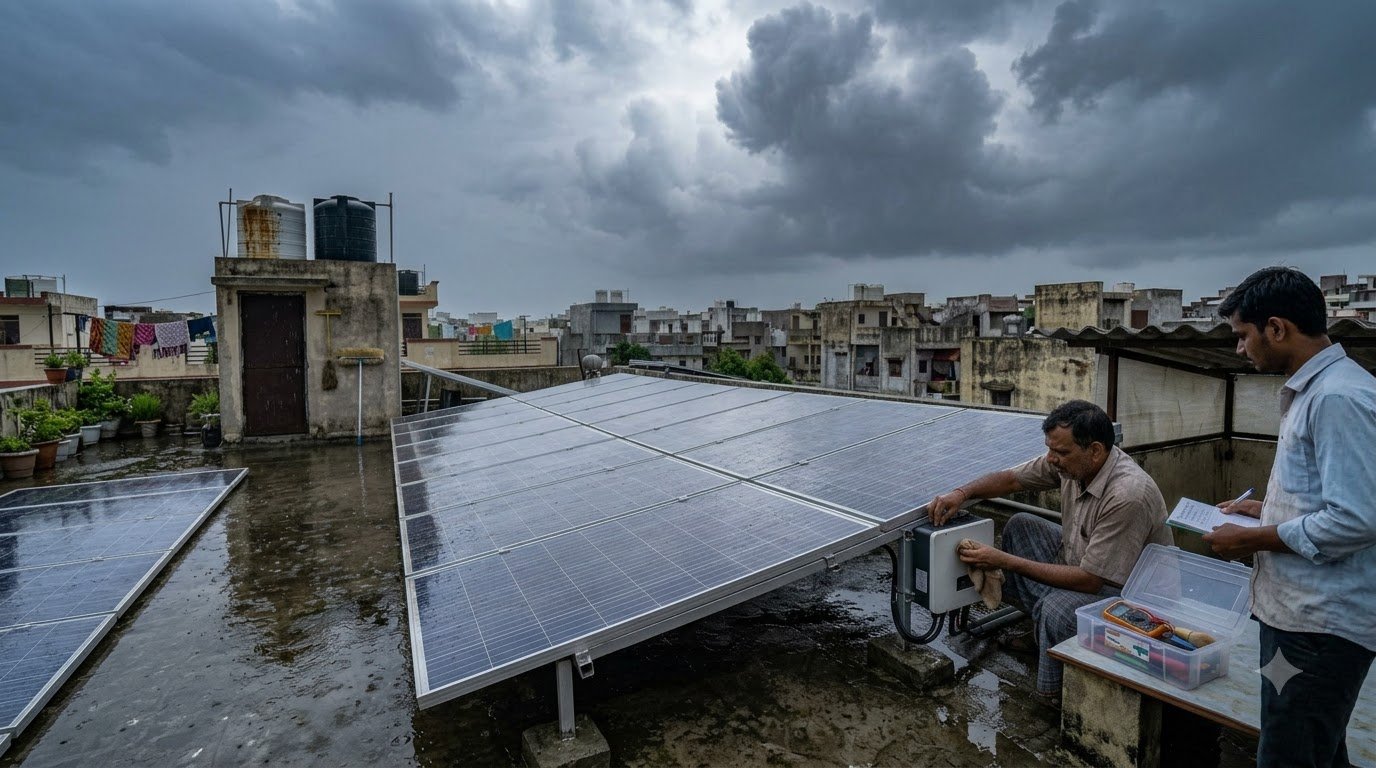
Before the rains set in, take a few minutes to check for loose wiring, water pooling near the mounting structure, or any visible physical damage. It’s also worth checking for new shadows from branches that may have grown over the panels during the season. Keep an eye on your inverter readings too, since a sudden unusual drop can point to a moisture-related issue worth getting checked professionally.
Staying Powered Without Interruption
If you’re on an on-grid system, any shortfall in solar generation is automatically covered by the grid, so you won’t actually experience a power gap at home. Net metering adds another layer of protection by banking surplus energy from sunnier days to offset lower-output ones. And if you have battery storage, stored energy from better days can carry you through longer, heavier monsoon stretches without much disruption at all.
Conclusion
A solar panel in the rainy season will generate less than it does in peak summer, but it keeps working reliably as long as it’s properly installed and maintained. The occasional dip in output during monsoon doesn’t change the long-term value solar delivers across the rest of the year. If you want your system monsoon-ready or want to explore starting your solar journey even during the rainy season, get in touch with our team for a proper inspection or consultation.