
Solar energy myths continue to circulate even as rooftop installations cross record numbers under the PM Surya Ghar scheme. Many of these beliefs date from a decade ago when systems were expensive and technology less mature. This article examines seven of the most persistent solar energy myths in India and replaces them with current data and practical experience.
TABLE OF CONTENT
Solar panels and Indian heat
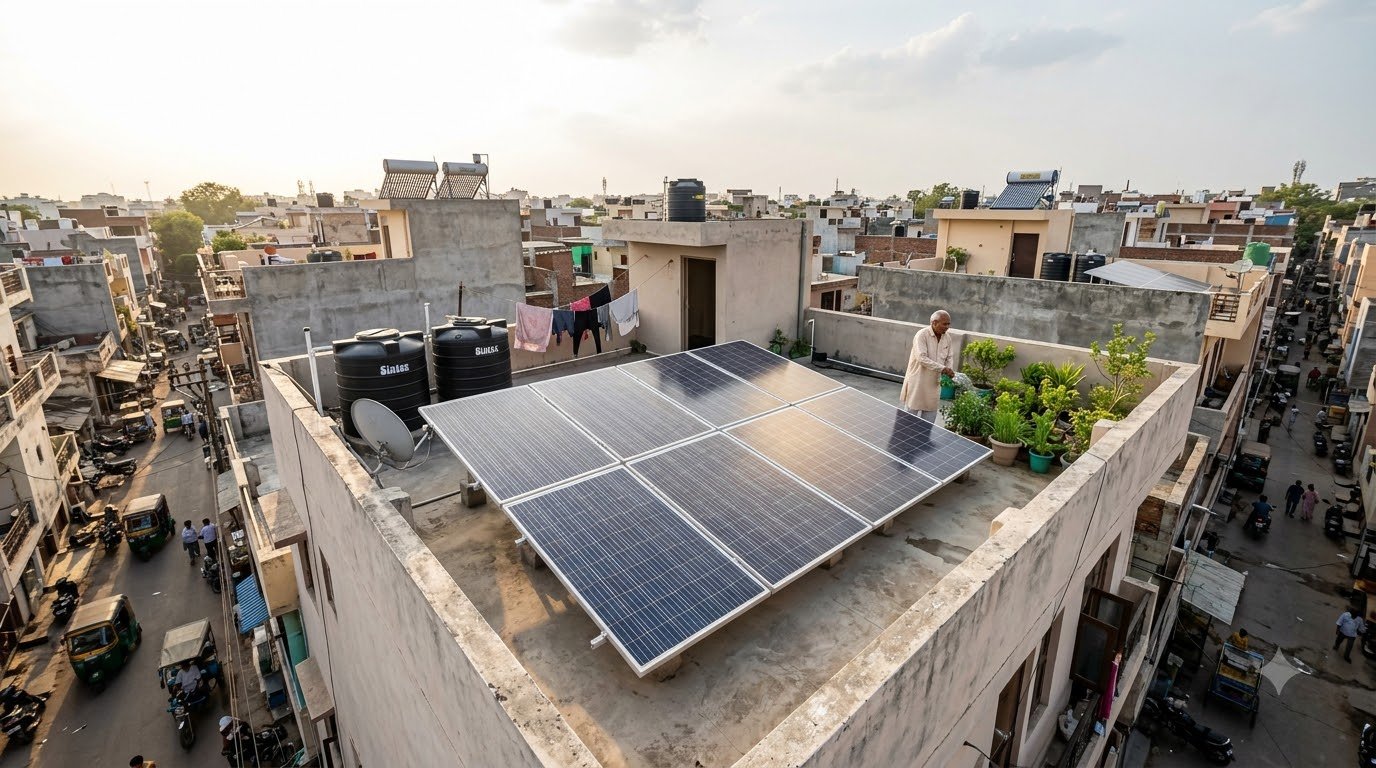
A widespread claim is that solar panels stop working or lose most of their efficiency in India’s summer heat. Crystalline-silicon modules do lose roughly 0.3–0.5% of rated output for every degree above 25°C, yet the loss is modest. High solar irradiation across most of the country more than offsets the temperature effect.
Measured annual yields in Rajasthan and Gujarat routinely reach 2,100–2,300 kWh per installed kilowatt — nearly double the output recorded in temperate European climates. Real-world performance data therefore show that heat is not a barrier. Proper ventilation under the panels further limits surface temperature rise and keeps generation strong throughout the year.
Solar rooftops are expensive
Another common solar energy myth is that only wealthy households can afford rooftop systems. Module prices have fallen approximately 80% since 2010, and the central CFA under PM Surya Ghar now.
Payback periods of three to six years are normal in cities with moderate to high tariffs. Once the system is paid off, electricity for the next twenty-plus years is essentially free, making solar one of the strongest middle-class investments available today.
Solar panels are ineffective during monsoons
Many people believe panels produce zero power whenever the sky is overcast. Solar cells respond to light, including diffuse light that passes through clouds. On heavily overcast days generation typically falls to 15–40% of clear-sky levels, not to zero.
Monsoon months are already factored into professional energy-yield estimates. Coastal cities such as Mumbai and Kolkata still record useful monthly production during the rains, and rainfall itself helps wash dust from the panels. Annual generation figures therefore remain reliable even in regions with distinct wet seasons.
High maintenance cost
Fear of constant upkeep stops some buyers. Modern rooftop systems have almost no moving parts. Quarterly cleaning of the modules and one professional inspection per year are sufficient for most installations.
Tier-1 panels carry 25–30 year performance warranties, so the long-term service burden is low compared with almost any other home appliance.
Solar panels compromises rooftop integrity
Concern that mounting structures will cause leaks or weaken the roof is frequent. When installation follows Indian Standards for wind load (IS 875) and uses proper waterproofing flashings, the risk of damage is minimal.
In many cases the panels actually shield the covered roof area from ultraviolet radiation and heavy rain, extending the life of the waterproofing membrane. Professional, MNRE-empanelled installers routinely deliver leak-free systems.
Solar panels requires additional battery
A persistent myth is that solar is useless after sunset and therefore requires expensive batteries. Grid-tied systems with net metering export surplus daytime energy to the grid and draw power back at night or on low-generation days.
The grid effectively acts as a free virtual battery. Physical battery storage remains an optional add-on for those who want backup during prolonged outages, not a mandatory cost for ordinary rooftop solar.
Claiming government subsidy is hard
Another common myth is that the PM Surya Ghar subsidy is difficult to obtain. Official figures show that millions of households have already received the Central Financial Assistance through direct bank transfer after successful commissioning and net-metering.
Using an empanelled vendor, completing the online application correctly, and ensuring timely inspection are the practical steps that lead to payment. State top-ups in several regions further improve the net economics.
Conclusion
In short, the most common solar energy myths no longer match 2026 realities of cost, performance, maintenance or policy support. Heat, clouds, night-time use, roof safety and subsidies have clear, data-backed answers. Understanding these facts removes the main barriers that still prevent many Indian households from adopting rooftop solar.
If you are evaluating a solar power system for your home or business, get in touch, share your location, monthly electricity consumption and roof type, and we can prepare a clear, cost and savings estimate tailored to your situation.