
India is changing and not just in its cities or industries. The shift toward green energy is now showing up in some of the most iconic and well-known places across the country. From busy airports and packed metro stations to roaring cricket stadiums, India’s most popular destinations are proving that clean, sustainable power is no longer just an idea, it’s a reality.
So, what does it look like when a famous place goes solar? Let’s find out.
TABLE OF CONTENT
Why India's Landmarks Are Turning to Green Energy
The Growing Need for Clean Energy in India
India is one of the world’s largest energy consumers. With a growing population and an ever-expanding infrastructure, the demand for electricity continues to rise every year. But traditional power sources like coal and fossil fuels are costly, polluting, and finite.
This is where solar power in India has become a game-changer. The sun shines for most of the year across the subcontinent, making it one of the most solar-rich countries in the world. Businesses, institutions, and public infrastructure are now taking full advantage of that natural gift.
The government’s push for renewable energy India targets aiming for 500 GW of renewable capacity by 2030 has further accelerated adoption. And some of the country’s most visited and recognizable places have already made the leap.
3 Popular Places in India That Are Successfully Running on Green Energy
1. Cochin International Airport, Kochi (Kerala)
The World's First Fully Solar-Powered Airport
When you think of airports, you think of round-the-clock operations, bright terminal lights, conveyor belts, air-conditioning all of it consuming enormous amounts of electricity. Now imagine running all of that on green energy alone.
That’s exactly what Cochin International Airport (CIAL) in Kerala did. On August 18, 2015, CIAL made history by becoming the world’s first airport to operate completely on solar power. Every light, every system, every unit of electricity used within the airport comes from the sun.
The airport installed a solar plant that now spans 94 acres near the international cargo complex, with over 92,150 solar panels and a total installed capacity of 50 MWp. The plant generates approximately 1,60,000 units of electricity every single day and produces surplus power that is fed back into the state grid.
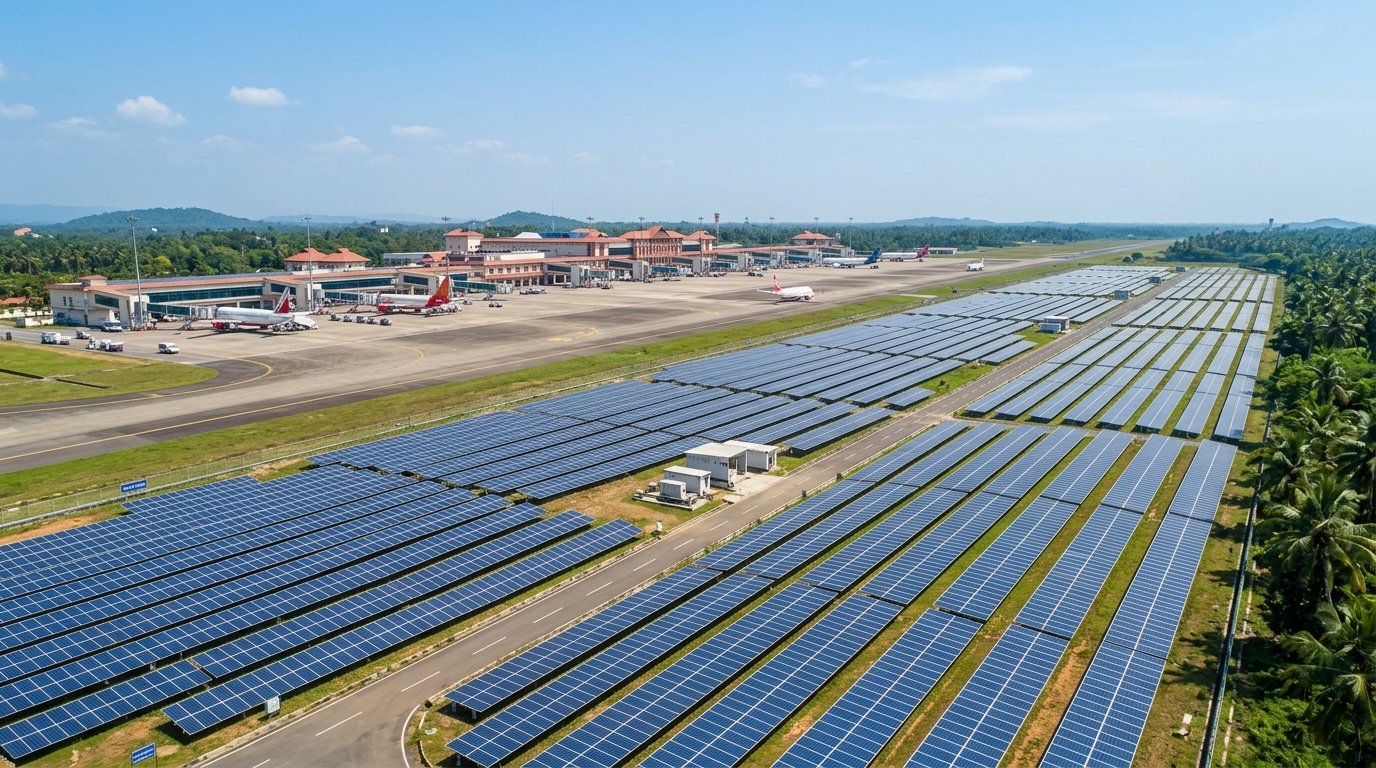
What makes this even more impressive is that the airport earns revenue by selling the extra power it generates. CIAL also grows pesticide-free vegetables between the solar panel rows using agro-photovoltaic methods, reusing the water from panel cleaning for the crops. It’s a full circle of sustainability.
The project is expected to offset carbon emissions by over 3,00,000 tonnes over 25 years roughly equivalent to planting 3 million trees. CIAL was also awarded the United Nations’ Champions of the Earth Award in the Entrepreneurial Vision category, a global recognition of what India solar energy leadership truly looks like.
This isn’t just a local achievement. It’s a blueprint that airports around the world now look up to.
2. M. Chinnaswamy Stadium, Bengaluru (Karnataka)
The World's First Solar-Powered Cricket Venue
Cricket and solar energy might not seem like an obvious pair but the M. Chinnaswamy Stadium in Bengaluru has made that combination world-famous. Home to the Royal Challengers Bengaluru (RCB) and one of India’s most electric IPL venues, Chinnaswamy is also the world’s first solar-powered cricket stadium.
In 2015, the Karnataka State Cricket Association (KSCA) installed a 400 kWp rooftop solar power plant on the eastern stands of the stadium. The system generates approximately 40,000 units of electricity every month, powering the stadium’s daily operations lighting, administration, maintenance, and more.
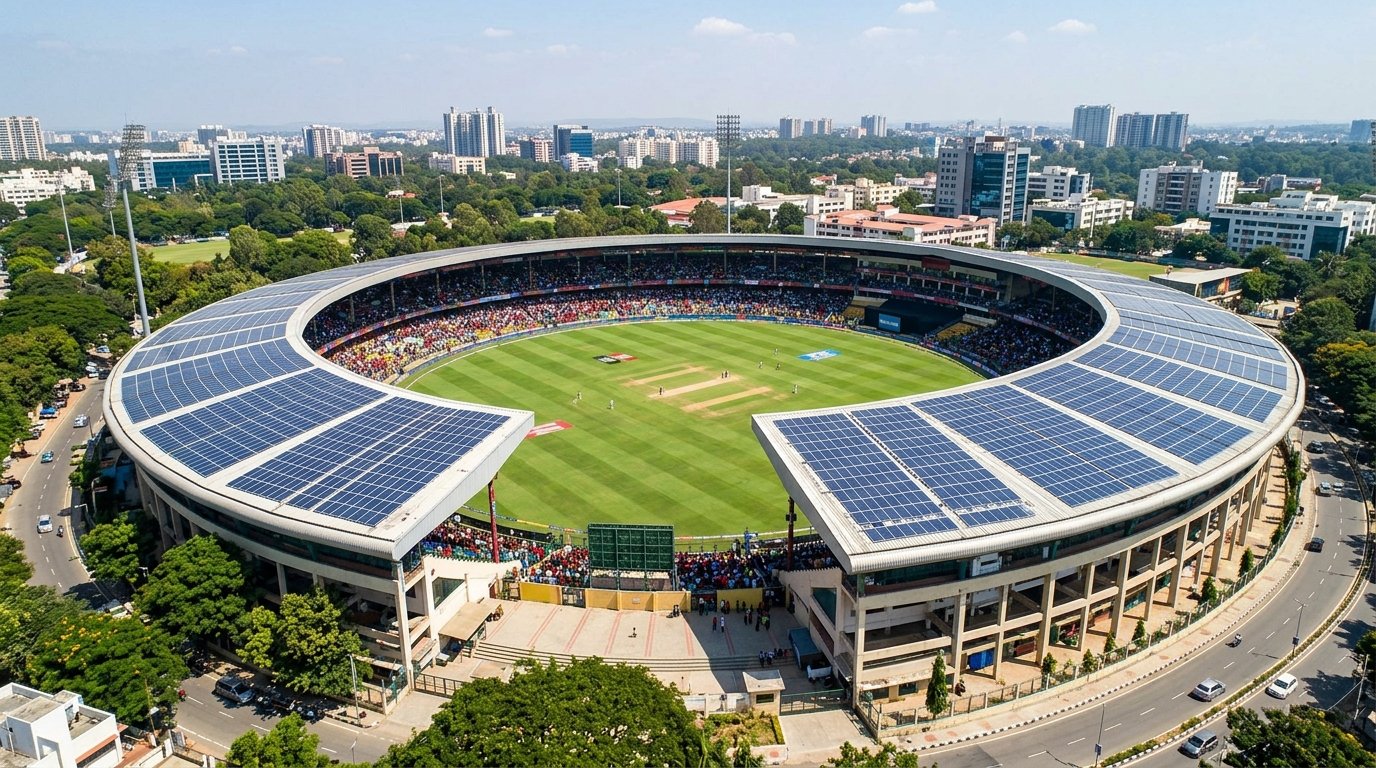
Before solar, the stadium’s annual power bill ran between ₹1 to ₹1.2 crores. With the solar system now in place, it generates nearly 6 lakh units per year, saving the association an estimated ₹5–6 lakh every month. The surplus power is sold back to BESCOM (Bangalore Electricity Supply Company) at ₹9.5 per unit turning clean energy into a direct revenue stream.
The carbon impact is also notable. The system cuts carbon emissions by approximately 600 tonnes annually. The roof has further potential for up to 1.3 MW of capacity once the western stands are fitted with panels too, which would make the savings even more substantial.
Chinnaswamy Stadium shows that even a high-energy entertainment venue can run on renewable energy solutions without compromising the fan experience one bit. The next time you’re watching an IPL match there, know that the floodlights just might be running on sunshine.
3. Delhi Metro (DMRC), New Delhi
The Greenest Metro System in the World
Every single day, over 60 lakh passengers travel on the Delhi Metro. It is one of the busiest and most extensive metro rail networks in Asia, covering 327 km with 236 stations. Running such a massive system requires enormous energy and DMRC has made a firm commitment to making that energy clean.
Delhi Metro currently sources 34% of its total power from solar energy, with a target to take that figure up to 50% by 2031. The bulk of this solar power comes from the Rewa Solar Park in Madhya Pradesh, 500 km away. Additionally, DMRC has installed 50 MWp of rooftop solar panels across its stations, depots, staff housing, and administrative buildings.
But DMRC’s green energy journey goes beyond just panels on rooftops. In 2011, it became the world’s first metro and rail-based system to earn carbon credits from the United Nations, certified under the Clean Development Mechanism (CDM). It has since earned ₹19.5 crore from the sale of 35.5 lakh carbon credits over six years revenue generated purely from being environmentally responsible.
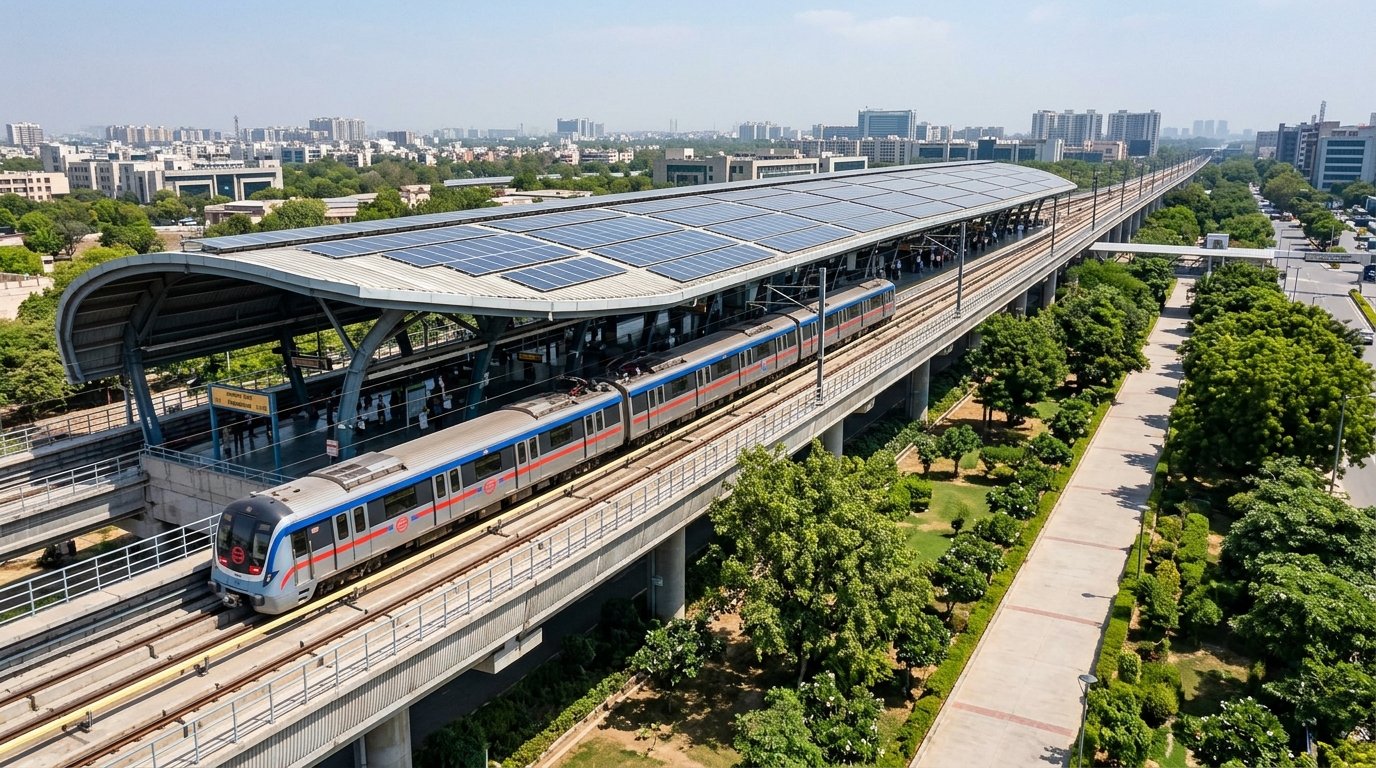
The Metro also uses regenerative braking technology, where trains generate electricity while braking and feed it back into the system cutting energy consumption by up to 30%. Close to 4 lakh private vehicles have been removed from Delhi’s roads because of the metro, directly reducing city-level pollution.
DMRC’s commitment to renewable energy India isn’t just about cutting costs, it’s about setting the standard for every public transit system in the country.
What These 3 Examples Tell Us About Green Energy in India
These three examples: an airport, a cricket stadium, and a metro system couldn’t be more different from each other. Yet all three have successfully adopted green energy and are seeing real, measurable results.
Here’s what they all have in common:
- Significant reduction in electricity bills
- Lower carbon emissions and a smaller environmental footprint
- Revenue generation from surplus power or carbon credits
- Global recognition for sustainability leadership
If places like these, running 24/7 at massive scale can make the switch, so can homes, offices, factories, and businesses across India. Reliable solar backup ensures uninterrupted operations. The technology is available. The savings are real. And the time to act is now.
Conclusion
The Sun Is Already Powering India's Biggest Icons
From the runways of Kochi to the cricket pitches of Bengaluru to the metro tunnels of Delhi, green energy is already at the heart of India’s most popular places. These aren’t experiments; they are fully operational, award-winning, money-saving, planet-friendly success stories.
The shift to solar power in India is not something coming in the distant future. It’s already here, and it’s working better than most people realize.
Whether you’re a homeowner, a business owner, or managing a large commercial space, the opportunity to tap into clean energy has never been more accessible or more beneficial.
If you’re ready to take the next step toward energy independence through India solar energy, explore the range of solar products and solutions built to meet every need from rooftop systems to complete power backup setups. Because the best time to go solar was yesterday. The next best time is today.