
Living near the coast provides stunning views and a fresh, coastal lifestyle, but it also brings specific challenges for renewable energy systems. The salty air, high humidity, and occasional sandy winds can all affect how well your equipment holds up over time. If you want to maintain high power output, it’s important to understand how to keep your solar panels running efficiently in a maritime setting.
Although solar technology is quite durable, coastal conditions require a different approach compared to installations in inland areas.
With morning mists and salty winds, your system needs a bit more attention to stay in optimal condition. Here’s a guide to help you keep your energy production at its best while enjoying life by the sea.
TABLE OF CONTENT
- Why Coastal Areas are Different for Solar
- How to Clean Your Panels Without Damaging Them
- Protecting Your Gear from Salt and Rust
- Precision Monitoring for Peak Performance
- Keeping the Air Flowing and the Temperatures Low
- When to Call in a Professional
- Tips for Long-Term Durability
- Get the Most Out of Your Coastal Solar
- Frequently Asked Questions (FAQs) About Coastal Solar
Why Coastal Areas are Different for Solar
Coastal areas are great for solar energy because they often have a lot of reflective light from the water. However, the same sea breeze that feels pleasant on a hot day brings along microscopic salt particles. When these particles settle on your solar panels, they form a thin, crusty layer. This film acts like a dimmer switch, reducing the efficiency of the solar by blocking sunlight from reaching the cells.
To handle this, you need to be proactive.
Instead of waiting for rain to clean the panels, having a regular cleaning schedule is your best bet. In coastal areas, rain mixes with salt and dust to leave behind a sticky residue that doesn’t easily wash away. Staying ahead of this buildup helps ensure your system maintains its performance and continues to generate maximum power.
How to Clean Your Panels Without Damaging Them
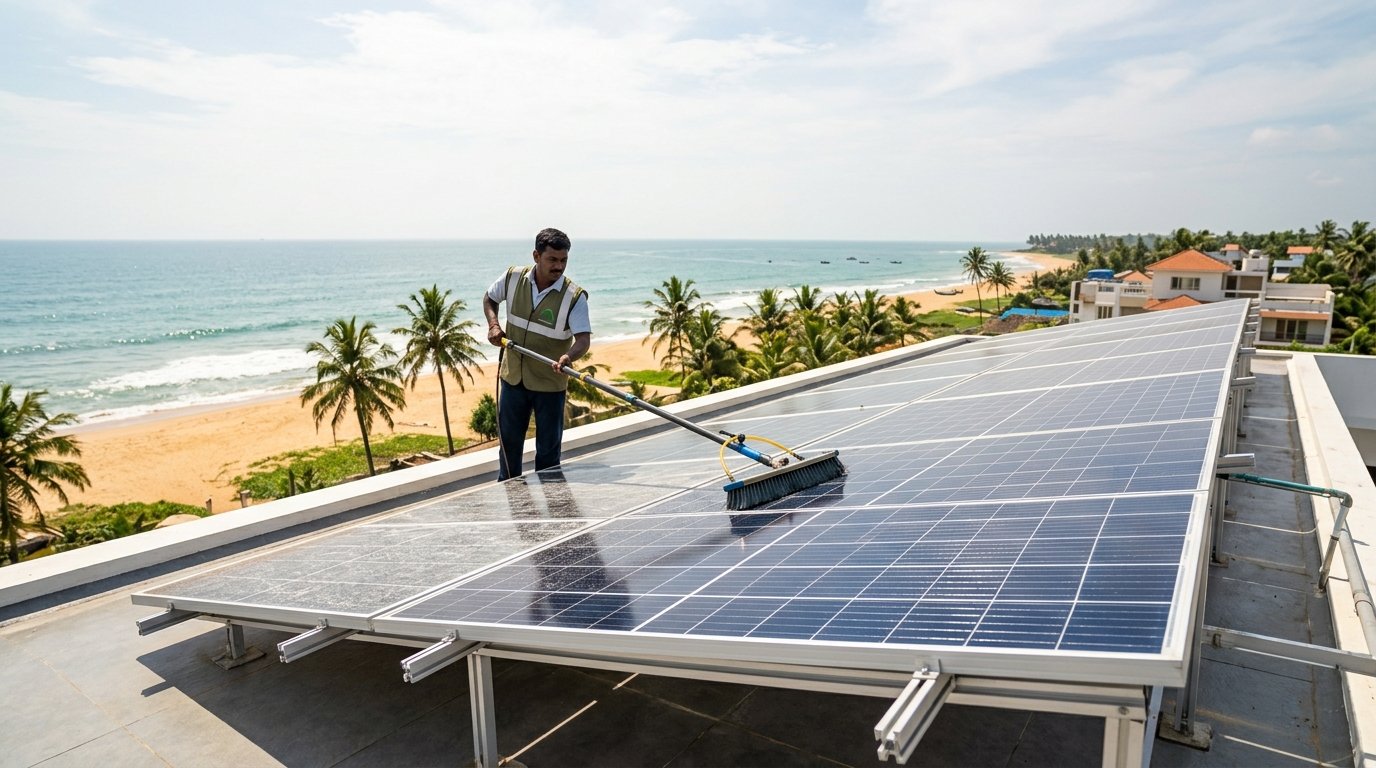
When it comes to cleaning solar panels, less is usually better. You might think using strong cleaners would work best for getting rid of salt buildup, but those harsh chemicals can actually damage the protective layer on the glass. This layer is vital for maximizing solar panel efficiency and light absorption.
The best way to clean them is really simple: use warm, soft water and a gentle sponge or a microfiber cloth.
If you can get deionized or distilled water, that’s even better because it helps prevent spots from forming as the water dries. Try to clean the panels early in the morning or later in the evening. If you clean them when the glass is hot from the midday sun, cold water can cause it to crack, and those little cracks are really hard to fix.
Protecting Your Gear from Salt and Rust
Beyond the glass, your system’s structure could be harmed by the environment. For people living near the coast, fighting against corrosion is really important. Saltwater is really harsh on metals, and if your mounting racks or screws aren’t made for use in the sea, they can slowly break down over time.
You should check your mounting parts every few months for signs of rust. Using anodized aluminum or stainless steel helps protect the structural integrity, which indirectly supports long-term solar panel efficiency by keeping the panels perfectly angled.
A lot of good coastal setups use anodized aluminum or stainless steel to stop this from happening. If you see any rust stains or “bleeding” around the bolts, it means you need to be more careful with maintenance. Keeping the metal parts clean and sometimes using a special marine-grade sealant can help you avoid expensive fixes later on.
Precision Monitoring for Peak Performance
One of the smartest ways to make sure your solar energy system works efficiently is by using a monitoring app. By keeping track of your daily output, you can notice patterns.
For example, You see a 10% decrease in production over a week with no changes in weather. It’s a strong sign that salt film is affecting your solar panel efficiency. Regularly checking your data helps you stay proactive. And if you are looking to maximize your financial returns right from the start, you can follow this step-by-step guide to claiming solar subsidies in Karnataka to lower your initial investment. This approach lets you climb on the roof only when needed and ensures you don’t miss out on potential savings due to underperformance.
Keeping the Air Flowing and the Temperatures Low
It might seem a bit confusing, but solar panel efficiency actually decreases when the panels get too hot. Coastal areas can be especially humid, which can trap heat around the panels. When inspecting your installation, make sure there’s enough airflow between the roof and the panels.
During your regular maintenance checks, remove any leaves, bird nests, or debris that might have gotten stuck underneath the system. This debris not only blocks airflow but can also trap moisture between your roof and the panels, leading to mold or more corrosion. Keeping a clear path for the wind to flow through will help keep your system cooler and more efficient.
When to Call in a Professional
Doing your own solar panel cleaning is helpful for regular upkeep, but it’s smart to have a professional come once a year. They can inspect the electrical connections and the condition of your inverter parts that are hard to see without tools. In coastal areas, electrical connections are more likely to suffer from “salt creep,” where salt gets into the wiring and can cause electrical problems.
Professional maintenance also involves checking the seals on your junction boxes and ensuring the cables haven’t worn down from strong coastal winds.
This thorough check gives you confidence that your system is safe and will keep producing efficient solar energy for many years.
Tips for Long-Term Durability
Living by the coast is like running a long race, not a quick sprint, and the same applies to maintaining your energy system. By selecting top-quality, marine-approved parts from the beginning and keeping up with a mild cleaning schedule, you can greatly reduce the dangers that salt and sand bring.
Steadiness really makes a difference.
Spending a little time on your system every few weeks is far better than doing a big cleanup once a year. When you treat your energy system as an essential part of your home, it pays off with lower costs and a smaller impact on the environment.
Get the Most Out of Your Coastal Solar
Keeping your solar system in a coastal area doesn’t have to be a hassle. With a solid understanding of the elements and a simple maintenance routine, you can safeguard your investment and continue enjoying the advantages of clean, renewable energy for years. By focusing on regular inspections and careful upkeep, you help ensure your home stays efficient and reliable.
Ready to unlock your home’s full energy potential?
Discover advanced solar options and expert guidance tailored to your coastal energy needs and experience how simple it is to power your life with the sun.