
Switching to solar energy is no longer just about being eco-friendly; it’s one of the smartest financial decisions a homeowner can make. With the strong sun shining over Karnataka, there’s huge potential for energy independence. However, the upfront cost of installation can be a big concern. That’s where government support comes in to help make the switch more affordable. Programs like the PM Surya Ghar Muft Bijli Yojana are making it easier for people to adopt clean energy.
If you’re thinking about going solar but feel confused by the paperwork and technical terms, this guide is for you. It will take you through the steps to claim your subsidy in Karnataka, one by one.
TABLE OF CONTENT
Why Karnataka is the Ideal Place for Solar Power
Karnataka has always been a leader in adopting renewable energy in India. From the large solar parks in Pavagada to the numerous residential rooftops in Bengaluru and Mysore, the state is well-positioned for a solar transformation. By installing a rooftop solar system, you are not only reducing your carbon footprint but also securing your electricity costs for the next 25 years.
The launch of the PM Surya Ghar Muft Bijli Yojana has made the financial side of this shift much easier.
This central scheme aims to provide free electricity to households by encouraging the installation of rooftop solar plants. For Karnataka residents, the combination of central incentives and the state’s efficient grid system means a quicker return on investment than ever before.
Understanding the Financial Assistance Available
Before getting into the steps, it’s important to understand the extent of the support available. The subsidy plan is set up to help residential users, especially those who install smaller solar systems that meet regular home energy needs.
Under the current rules of the PM Surya Ghar Muft Bijli Yojana, families can get good financial help.
Usually, for systems up to 2 kW, the subsidy covers most of the cost. For systems between 2 kW and 3 kW, there is extra support, but it’s limited to a certain amount to make sure as many homes as possible benefit.
A Clear Roadmap to Claiming Your Solar Subsidy
Navigating government websites can sometimes feel confusing.
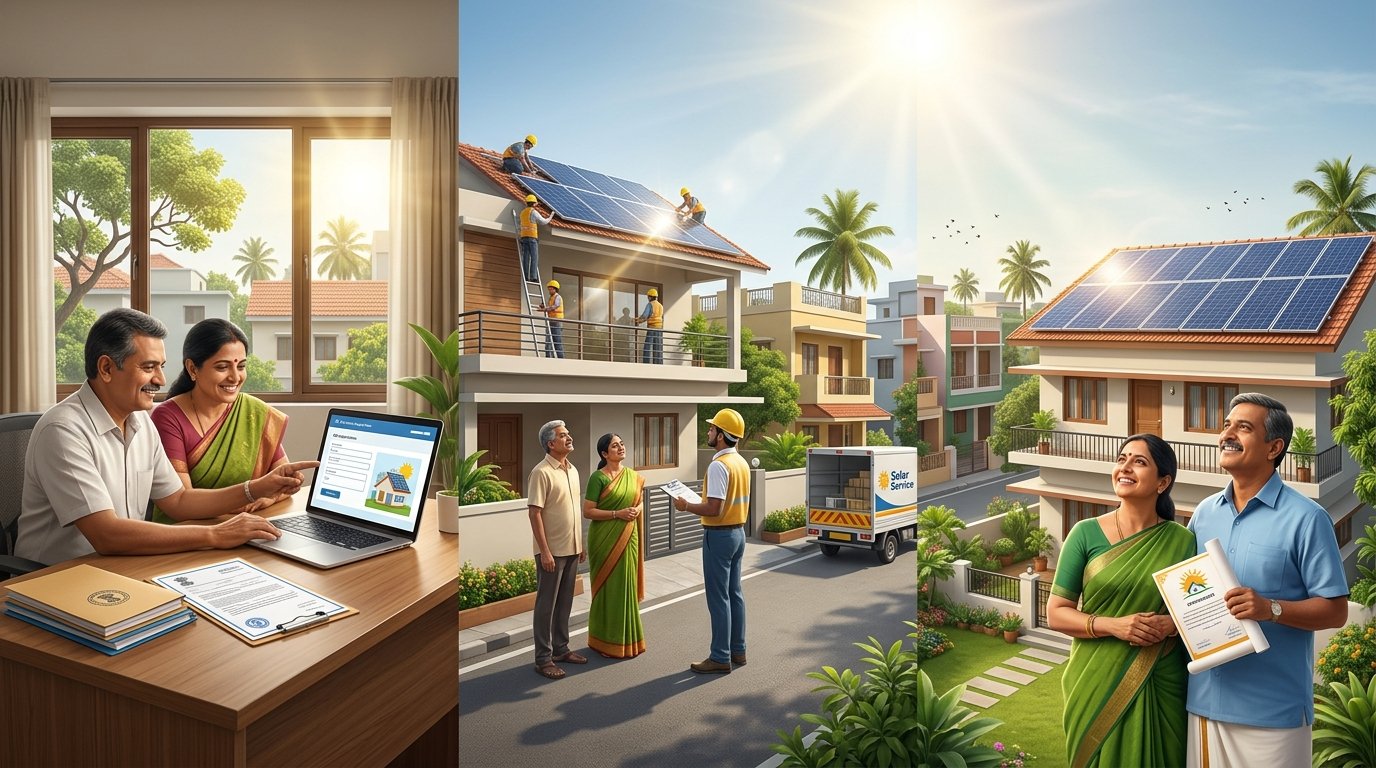
To help you proceed with ease, here’s a simple guide that takes you from a regular roof to a solar-powered home.
Step 1: Start with the National Portal
The whole process is now organized in one place to make things clear.
Your first step should be the official National Portal for Rooftop Solar. You’ll need to sign up using your mobile number, email, and most importantly, your electricity account details. Whether you are with BESCOM, MESCOM, or HESCOM, make sure you have your consumer account number ready.
Step 2: Technical Feasibility Approval
Once registered, you will submit an application for rooftop solar installation.
This application is forwarded to your local Electricity Distribution Company (DISCOM) in Karnataka. They will evaluate whether your local power grid can accommodate the solar energy you might feed back into it. This process is called technical feasibility. Once approved, you will receive a notification through the portal.
Step 3: Choose an Empowered Vendor
This is an important step.
To qualify for the PM Surya Ghar Muft Bijli Yojana benefits, you need to have your system installed by a vendor that is approved by the DISCOM. These vendors adhere to certain technical standards and safety rules set by the government. They will assist you in selecting the correct capacity and help you decide between on-grid, off-grid, or hybrid solar systems to ensure the equipment meets the required “Made in India” criteria, which is a key condition for receiving the subsidy.
Step 4: Installation and Inspection
Once the installation is finished, the vendor will provide the installation details on the portal.
You will then need to apply for a “Net Meter.” This is a special meter that monitors both the electricity you use from the grid and the surplus solar power you send back. A representative from your DISCOM will visit your location to inspect the system and install the net meter.
Step 5: The Final Subsidy
Once the inspection is successful and the commissioning certificate is generated online, you can submit your bank account details along with a cancelled cheque through the portal.
The subsidy amount, as calculated under the PM Surya Ghar Muft Bijli Yojana, will be directly credited to your bank account, usually within 30 days of the system being commissioned.
The Long-Term Benefits of Rooftop Solar
Investing in a rooftop solar subsidy program isn’t just about the initial discount.
It’s about the long-term savings that come with it. In Karnataka, where electricity prices can change often, having your own power source gives you a sense of stability. Most residential solar systems pay for themselves in 4 to 5 years, leaving you with almost 20 years of “free” electricity.
Furthermore, the PM Surya Ghar Muft Bijli Yojana highlights the importance of sustainable living for people across all income levels.
By making it easier to access solar energy, the government is promoting an inclusive green energy transition, allowing every home to contribute to India’s environmental goals while also saving money.
Common Obstacles and How to Avoid Them
Although the process is simple, some common errors can slow down your Karnataka solar subsidy.
- Incorrect Documents: Make sure the name on your electricity bill is the same as the name on your subsidy form.
- Unapproved Installers: Check that your installer is listed on the National Portal.
- Shaded Rooftops: Ensure your roof gets direct sunlight from 9 AM to 4 PM.
Even a small shadow from a tree or building can greatly reduce your solar energy output.
Beyond positioning, keeping your equipment clean is vital, especially in regions with high salt or humidity; you can follow these tips for maintaining solar panel efficiency in coastal areas to ensure your system performs optimally year-round.
Embracing a Brighter Future
Making the switch to solar energy is a smart move that helps your finances and the environment at the same time.
There are government subsidy programs in place to make this change easier for everyone. By taking the right steps and selecting high-quality equipment, you can turn your roof into a source of significant savings.
If you’re ready to stop stressing about increasing electricity costs and start producing your own clean energy, now is the ideal time to look into options for your home.
Ready to begin your path toward energy independence?
Discover professional solar solutions tailored for homes in Karnataka and take the first step toward a more sustainable future today.