
Switching to solar power feels exciting, but choosing the right setup can leave you scratching your head. With frequent power cuts, rising electricity bills, and a growing push for green energy in India, more homeowners are exploring solar panel systems. But which type suits your home best, on-grid, off-grid, or hybrid? This guide breaks it down simply, so you can decide with confidence. We’ll compare how they work, their costs, pros, cons, and real-life fit, helping you pick solar panel systems that match your needs and budget.
TABLE OF CONTENT
- How Each Solar Panel System Works: A Simple Breakdown
- Pros, Cons, and When Each Shines
- Solar Panel Installation Cost Compared (2026 India)
- Which Solar Panel Systems Should You Choose?
- Real-Life Wins: Stories from Indian Homes
- Final Thoughts: Your Solar Journey Starts Here
- FAQs About On-Grid, Off-Grid & Hybrid Solar Systems
How Each Solar Panel System Works: A Simple Breakdown
Think of your home’s electricity like a three-way partnership between your rooftop solar panels, the utility grid, and smart storage. Here’s how the three types play out.
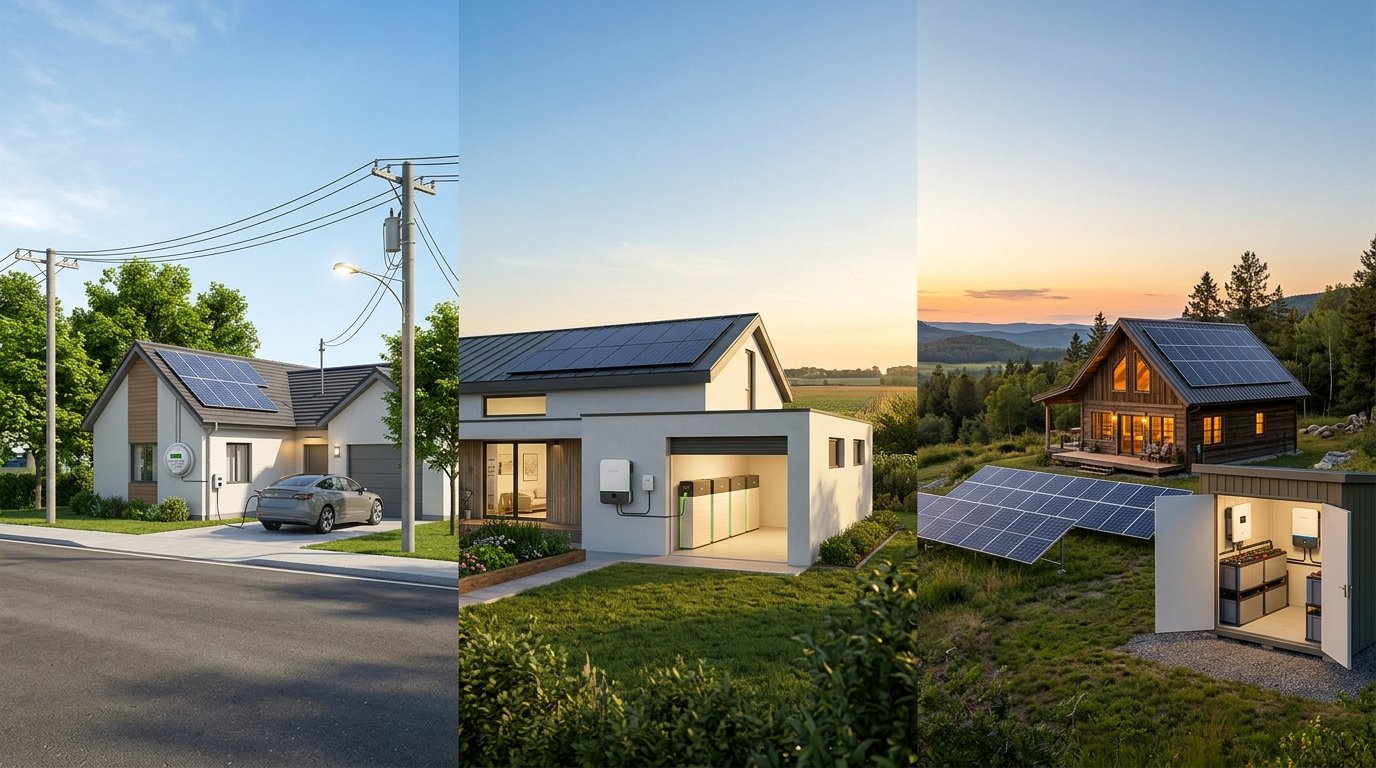
On-Grid Solar Systems (Also Called Grid-Tied Solar Systems)
These are the most popular choice for urban and suburban homes with reliable electricity supply. An on grid solar panel system connects directly to your local power grid. Your solar panels generate electricity during the day, powering your lights, fans, and appliances. Any extra power flows back to the grid through net metering—you earn credits on your bill! At night or on cloudy days, you simply draw from the grid as usual. No batteries needed, which keeps things straightforward and affordable.
Off-Grid Solar Systems
Perfect for remote areas or places with frequent blackouts, Off-Grid Solar Panel Systems operate completely independently. Solar panels charge batteries during the day, and you use that stored energy 24/7. No connection to the utility grid means true freedom—no monthly bills, no outages affecting you. It’s like having your own mini power plant on the roof.
Hybrid Solar System
The best of both worlds! A hybrid solar panel system stays connected to the grid but adds battery storage. On sunny days, panels power your home and charge batteries. Excess energy can feed the grid for credits. During outages, the batteries kick in automatically for backup. It’s flexible, smart, and future-ready—ideal if you want savings plus security.
Pros, Cons, and When Each Shines
Let’s compare them side by side so the differences jump out:
- On-Grid (Grid-Tied Solar Systems):
Pros: Lowest upfront cost, easy installation, net metering reduces bills by 70-90%, low maintenance, quick payback (4-5 years).
Cons: No power during grid outages, you still rely on the utility for night-time use.
Best for: City homes in Karnataka or anywhere with stable electricity and high daytime usage.
- Off-Grid Solar Systems:
Pros: Complete energy independence, works anywhere, zero electricity bills after setup, great for rural or farmhouses.
Cons: Highest solar panel installation cost due to big batteries, needs more panels for storage, battery replacement every 5-10 years.
Best for: Remote locations or families tired of power cuts.
- Hybrid Solar System:
Pros: Backup during outages, net metering + battery storage, optimizes every unit of solar power, scalable for future needs.
Cons: Higher cost than pure on-grid, slightly more complex maintenance.
Best for: Most Indian homes facing occasional blackouts but wanting bill savings too.
Solar Panel Installation Cost Compared (2026 India)
Budget is often the deciding factor. Here’s a realistic snapshot for a typical 3-5 kW home system in India (prices before subsidies like PM Surya Ghar):
- On grid solar system: ₹1.5–2.5 lakh (cheapest – no batteries).
- Off-Grid Solar Systems: ₹2.8–5.5 lakh (batteries add the big jump).
- Hybrid solar system: ₹2.4–4.5 lakh (batteries included but smarter inverter saves long-term).
Expect payback in 4-7 years depending on your usage and sunlight. Government subsidies can slash 30-40% off the solar panel installation cost, making solar panel systems even more attractive. Factor in your location—Karnataka’s sunny climate boosts output and speeds up returns.
Which Solar Panel Systems Should You Choose?
Ask yourself these quick questions:
- Do you have reliable grid power? → Go on-grid.
- Face daily outages or live remotely? → Off-grid for full energy independence.
- Want savings plus backup? → Hybrid is the sweet spot.
Most homes today lean toward hybrid solar systems because it balances cost, reliability, and future-proofing. Whichever you pick, quality panels, inverters, and batteries make all the difference. Understanding how do solar panels work within these different setups can help you determine which configuration best maximizes performance and lifespan (25+ years for panels) for your specific property.
Real-Life Wins: Stories from Indian Homes
Picture a Bengaluru family slashing their ₹8,000 monthly bill to ₹1,000 with an on-grid setup. Or a Udupi farmhouse enjoying uninterrupted power during monsoons thanks to off-grid batteries. Hybrid users in Hubli love watching their app show solar production, battery levels, and grid export all from their phone. These aren’t dreams, they’re everyday realities with the right solar panel systems.
Final Thoughts: Your Solar Journey Starts Here
Choosing between on-grid, off-grid, or hybrid isn’t about picking a “winner”—it’s about finding the perfect fit for your lifestyle, location, and goals. Whether you prioritize low solar panel installation cost, maximum energy independence, or a smart mix, the right solar panel systems can slash bills, cut carbon footprints, and give peace of mind for decades.
Ready to light up your home the smart way? Explore expert guidance, custom designs, and top-quality solutions—your partner for a brighter, independent tomorrow.