
Imagine capturing every ray of sunshine and using it long after the sun sets. That’s the magic of solar batteries in today’s renewable energy world. As solar panels become more common, the real game-changer is how you store that power for nighttime, cloudy days, or power outages. But with two main options on the table—a traditional lead acid battery and modern Lithium-Ion Batteries—which one truly powers your solar energy storage dreams?
This guide cuts through the tech jargon to compare Lead Acid vs. Lithium-Ion in simple terms. We’ll explore real differences, everyday impacts, and what it means for your home or business. Whether you’re new to solar or upgrading, you’ll walk away knowing exactly what fits your needs. Let’s dive in and make solar batteries work smarter for you.
TABLE OF CONTENT
- Why Solar Batteries Matter More Than Ever in Solar Energy Storage
- Understanding the Lead Acid Battery
- The Modern Powerhouse, Lithium-Ion Batteries Take Center Stage
- Lead Acid vs. Lithium-Ion
- Hidden Costs and Long-Term Wins in Solar Energy Storage
- Real-World Scenarios: Which Battery Fits Your Solar Lifestyle?
- Conclusion: Power Your Future with the Right Choice
- FAQs About Solar Batteries and Storage
Why Solar Batteries Matter More Than Ever in Solar Energy Storage
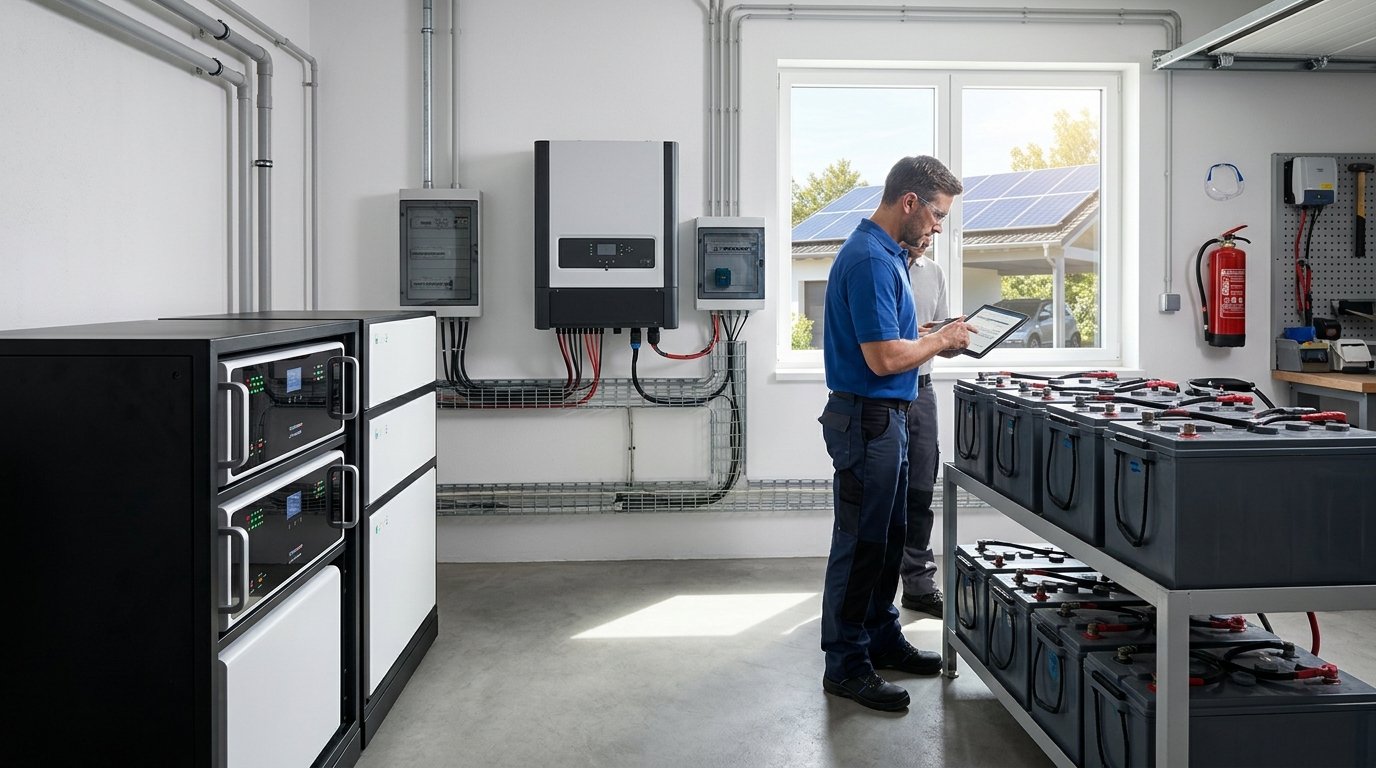
Solar power is clean and free, but it only flows when the sun shines. Solar batteries bridge that gap by storing excess energy from your panels for later use. Think of them as your personal energy bank—depositing power during peak sunlight and withdrawing it during blackouts or high-demand evenings.
In solar energy storage, these batteries boost reliability, cut electricity bills, and reduce dependence on the grid. They turn intermittent solar into steady, 24/7 power. But not all solar batteries perform the same. The choice between a lead acid battery and Lithium-Ion Batteries can mean the difference between frequent replacements and years of hassle-free backup. With rising energy costs and climate goals, picking the right one isn’t just smart, it’s essential for long-term savings and sustainability.
Understanding the Lead Acid Battery
The lead acid battery has been around for over 150 years, powering everything from cars to early off-grid setups. It’s like that trusty old truck—reliable, affordable, and widely available.
In solar energy storage, these batteries store energy through a chemical reaction involving lead plates and sulfuric acid. They’re budget-friendly upfront, often costing 30-50% less than alternatives. However, they come with trade-offs. You can only safely use about 50% of their stored energy (called depth of discharge) before risking damage. They also need regular maintenance, like checking water levels in flooded types, and perform best in moderate temperatures.
For occasional backup or small solar setups, a lead acid battery still holds its ground. But for daily cycling in modern solar batteries systems? It might leave you wanting more endurance.
The Modern Powerhouse, Lithium-Ion Batteries Take Center Stage
Enter Lithium-Ion Batteries, the sleek, high-tech option revolutionizing solar energy storage. Often using safe lithium iron phosphate (LiFePO4) chemistry, these are like the electric sports car of the battery world: efficient, lightweight, and built for the long haul.
Lithium-Ion Batteries shine with higher energy density, meaning they pack more power into a smaller, lighter package. No bulky banks needed! They handle 80-95% depth of discharge easily, charge faster, and boast 90-98% efficiency. That means almost every bit of solar energy you feed them gets used—no waste.
Maintenance? Minimal. Many are sealed and “smart,” with built-in systems that monitor health and protect against overcharging. They’re ideal for homes and businesses wanting seamless integration with solar batteries setups. Yes, they cost more initially, but their performance makes them a favorite for serious solar users.
Lead Acid vs. Lithium-Ion
Let’s break it down fairly in this Lead Acid vs. Lithium-Ion matchup. Here’s what really counts for solar energy storage:
- Lifespan and Cycles: A lead acid battery typically lasts 3-7 years or 500-1,000 cycles. Lithium-Ion Batteries? Expect 10-15+ years and 2,000-6,000+ cycles. Winner: Lithium-ion for fewer replacements. To ensure you aren’t caught off guard by a sudden power loss, it is helpful to recognize the 5 signs your industrial battery needs replacement before it fails, allowing you to plan your upgrade
- Efficiency: Lead acid hovers at 75-85% round-trip efficiency. Lithium-Ion Batteries hit 90-98%. More of your solar power stays usable.
- Depth of Discharge (DoD): Use only half a lead acid battery safely. Lithium-ion lets you tap 80-95%. That means smaller systems do more work.
- Size and Weight: Lead acid is heavy and space-hungry. Lithium-ion is compact and wall-mount friendly, perfect for tight spaces.
- Charging Speed: Lithium-ion recharges 2-3 times faster, ideal for variable sunlight.
- Maintenance: Lead acid often requires watering and ventilation. Lithium-ion is mostly set-it-and-forget-it.
Overall, Lithium-Ion Batteries pull ahead for most daily solar energy storage needs, while lead acid battery options suit very low-budget or backup-only scenarios.
Hidden Costs and Long-Term Wins in Solar Energy Storage
Upfront price favors the lead acid battery, but look closer. Over 10 years, replacements, maintenance, and lost efficiency make lithium-ion cheaper overall. Plus, better solar batteries mean more energy independence and lower bills.
Environmentally, Lithium-Ion Batteries (especially LiFePO4) have a smaller footprint with recyclable materials and less waste from replacements. Both types are recyclable, but lithium’s longevity wins here too.
Safety-wise, modern lithium has advanced protections, though lead acid is proven if maintained properly. For most users, the convenience of Lithium-Ion Batteries tips the scale.
Real-World Scenarios: Which Battery Fits Your Solar Lifestyle?
- Budget-conscious off-grid cabin: A lead acid battery might do the job for occasional use.
- Family home with daily solar cycling: Lithium-Ion Batteries deliver reliable power without drama.
- Commercial setup: Lithium-ion scales better for high-demand solar energy storage.
The key? Match your usage to the battery’s strengths for maximum ROI.
Conclusion: Power Your Future with the Right Choice
In the Lead Acid vs. Lithium-Ion battle for solar energy storage, Lithium-Ion Batteries emerge as the clear winner for most modern setups offering longer life, better efficiency, and effortless performance in solar batteries. The lead acid battery still has a place for simple, low-cost needs, but the future leans toward smarter, sleeker lithium.
Ready to make your solar system truly unstoppable? Unlock smarter solar energy storage and explore premium options tailored just for you. Your sun-powered tomorrow starts today!