
The Smart Way to Power Your Home — Day, Night, and Everything In Between
Rising electricity bills. Unpredictable power cuts. The growing urge to go green without breaking the bank. If these sound familiar, you’re not alone. Thousands of homeowners are switching to solar but not just any solar setup. They’re choosing hybrid solar systems, and for good reason.
This isn’t just about saving money on your electricity bill (though that’s a big part of it). It’s about owning a smarter, more resilient home. Let’s break down exactly why hybrid solar is worth every rupee.
TABLE OF CONTENT
- The Smart Way to Power Your Home — Day, Night, and Everything In Between
- What Even Is a Hybrid Solar System?
- The Real-World Value Hybrid Solar Delivers
- Why Hybrid Beats the Alternatives
- The Long-Term Investment Case
- Choosing the Right System: What to Look For
- Conclusion: The Smartest Energy Decision You’ll Make
- FAQs About Hybrid Solar Systems
What Even Is a Hybrid Solar System?
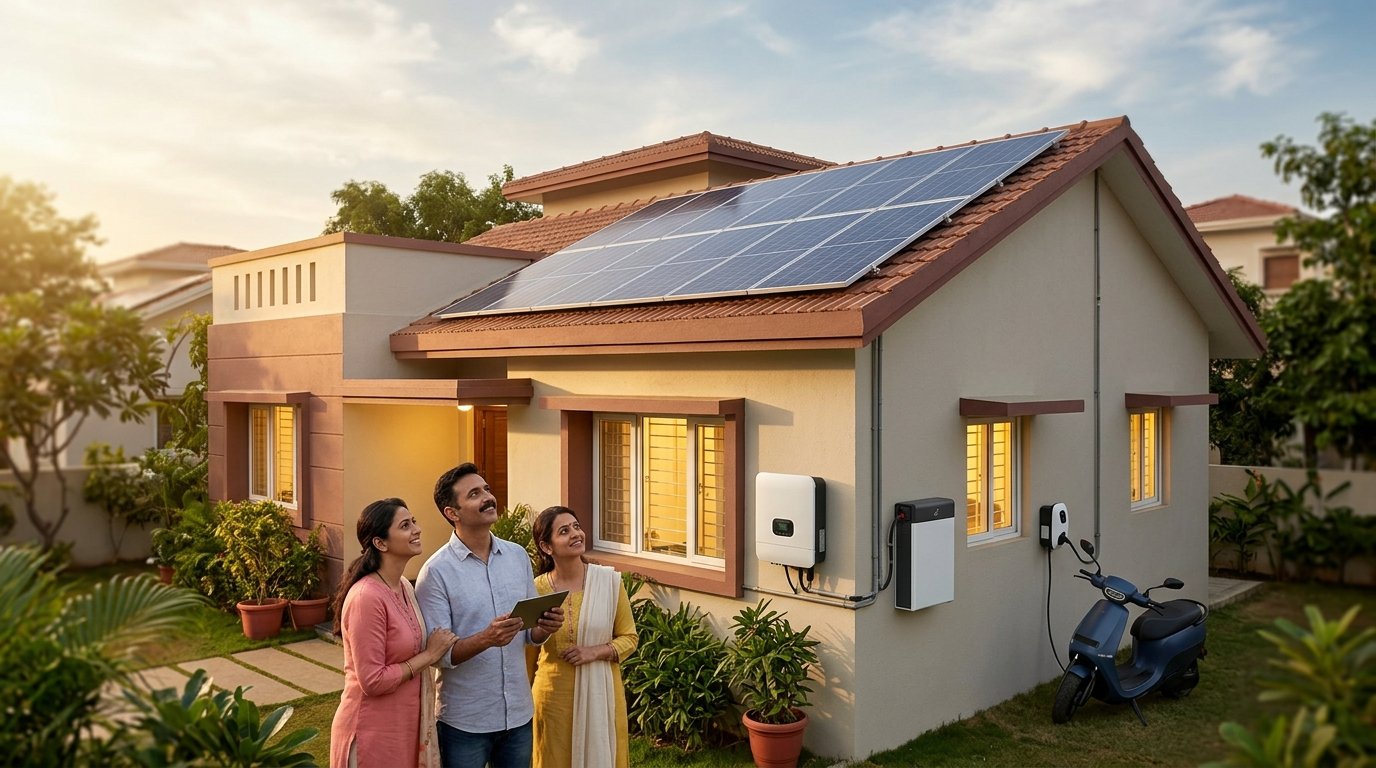
A hybrid solar system combines solar panels, a battery storage unit, and grid connectivity all in one. Unlike a basic on-grid setup that goes dark the moment there’s a power cut, or a fully off-grid setup that depends entirely on weather and battery levels hybrid systems do both.
Here’s the simple version:
- During the day, your solar panels generate electricity.
- Excess power charges your battery bank.
- At night or during outages, your battery kicks in.
- If both solar and battery fall short, the grid fills the gap automatically.
No interruptions. No manual switching. Just uninterrupted power.
The Real-World Value Hybrid Solar Delivers
Lower Bills From Day One
The most immediate benefit homeowners notice is a sharp drop in electricity costs. With hybrid solar systems, you consume your own solar-generated power first which is essentially free after installation. You draw from the grid only when absolutely necessary, and in some areas, you can even sell surplus power back. That’s your meter running backwards, quite liter
Backup Power Without a Separate UPS Setup
This is where hybrid stands apart from simple rooftop solar. Because the battery storage is integrated into the system, your home stays powered during load-shedding or outages automatically. No separate inverter, no clunky UPS unit sitting in the corner. It’s all built in.
For families with young children, home offices, or medical equipment this reliability isn’t a luxury. It’s a necessity.
Maximising Every Hour of Sunlight
Standard on-grid solar systems waste any power your home can’t use in real time. Hybrid solar systems store that excess for later, meaning nothing goes to waste. A cloudy afternoon doesn’t drain your battery, a sunny morning already fills it up.
Why Hybrid Beats the Alternatives
On-Grid Solar | Off-Grid Solar | Hybrid Solar | |
Works during power cuts? | ❌ | ✅ | ✅ |
Reduces electricity bill? | ✅ | ✅ | ✅ |
Grid-connected? | ✅ | ❌ | ✅ |
Battery storage? | ❌ | ✅ | ✅ |
Best for city/suburban homes? | ✅ | ❌ | ✅ |
This makes it clear. For most homeowners who live in areas with occasional power cuts but still have grid access, hybrid solar systems hit the sweet spot perfectly.
The Long-Term Investment Case
What's the Payback Period?
Most residential hybrid solar installations recover their cost within 4–7 years depending on your current electricity consumption, local tariff rates, and available subsidies. After that? You’re essentially generating free electricity for the next 20+ years. Panels are built to last, and modern lithium batteries now comfortably handle thousands of charge cycles.
Government Incentives Make It Even Better
India currently offers subsidies under the PM Surya Ghar Muft Bijli Yojana scheme for rooftop solar. Combined with reducing equipment costs year-on-year, there has never been a better time to invest in a hybrid solar system for your home.
Future-Proofing Your Home
As electricity prices continue to climb and battery technology improves, homes with hybrid solar are better insulated from energy price shocks. You’re not just buying a product — you’re locking in energy security for decades.
Choosing the Right System: What to Look For
Battery Type Matters
Not all batteries are the same. Lithium-ion batteries (like LiFePO4) offer longer life spans, deeper discharge cycles, and require almost no maintenance compared to older lead-acid options. When evaluating any hybrid solar system, always ask about the battery chemistry.
Inverter Quality Is Non-Negotiable
The hybrid inverter is the brain of your system — it manages solar input, battery charging, and grid interaction all at once. A quality hybrid inverter should come with app-based monitoring so you can track your energy generation and consumption in real time from your phone.
Panel Efficiency
Higher-efficiency panels (monocrystalline PERC or TOPCon technology) generate more power in the same roof space. If your roof area is limited, this becomes especially important.
Warranty and After-Sales Support
Always check for minimum 5-year inverter warranty and 10-year product warranty on panels, with 25-year performance guarantees. Local service availability matters; a solar system needs occasional monitoring and maintenance.
Conclusion: The Smartest Energy Decision You'll Make
Electricity is only getting more expensive. Power cuts aren’t going away overnight. And the window for maximum government subsidies won’t stay open forever. Hybrid solar systems aren’t a trend; they’re the most practical, future-proof energy solution available to homeowners today.
Whether you’re building a new home or looking to upgrade your current setup, making the switch to solar energy now puts you firmly ahead. If you’re ready to explore options tailored to your home’s requirements, a good place to start your solar journey.