
Solar Panels Are Getting Smarter
Solar energy has come a long way from clunky rooftop panels that barely made a dent in your electricity bill. In 2026, solar panel efficiency has hit new highs and the science behind it is genuinely fascinating. Whether you’re a homeowner exploring solar for the first time or someone already running on clean energy, understanding what’s changed (and why it matters) can help you make smarter energy decisions.
TABLE OF CONTENT
- Solar Panels Are Getting Smarter
- Why Solar Panel Efficiency Even Matters
- The Tech Shifts Driving Better Solar Performance
- Anti-Soiling Coatings: A Small Detail with a Big Impact
- AI and Monitoring: Knowing When Something’s Off
- What This Means If You’re Considering Solar in 2026
- Conclusion
- Frequently Asked Questions
Why Solar Panel Efficiency Even Matters
Before diving into the breakthroughs, let’s set the stage.
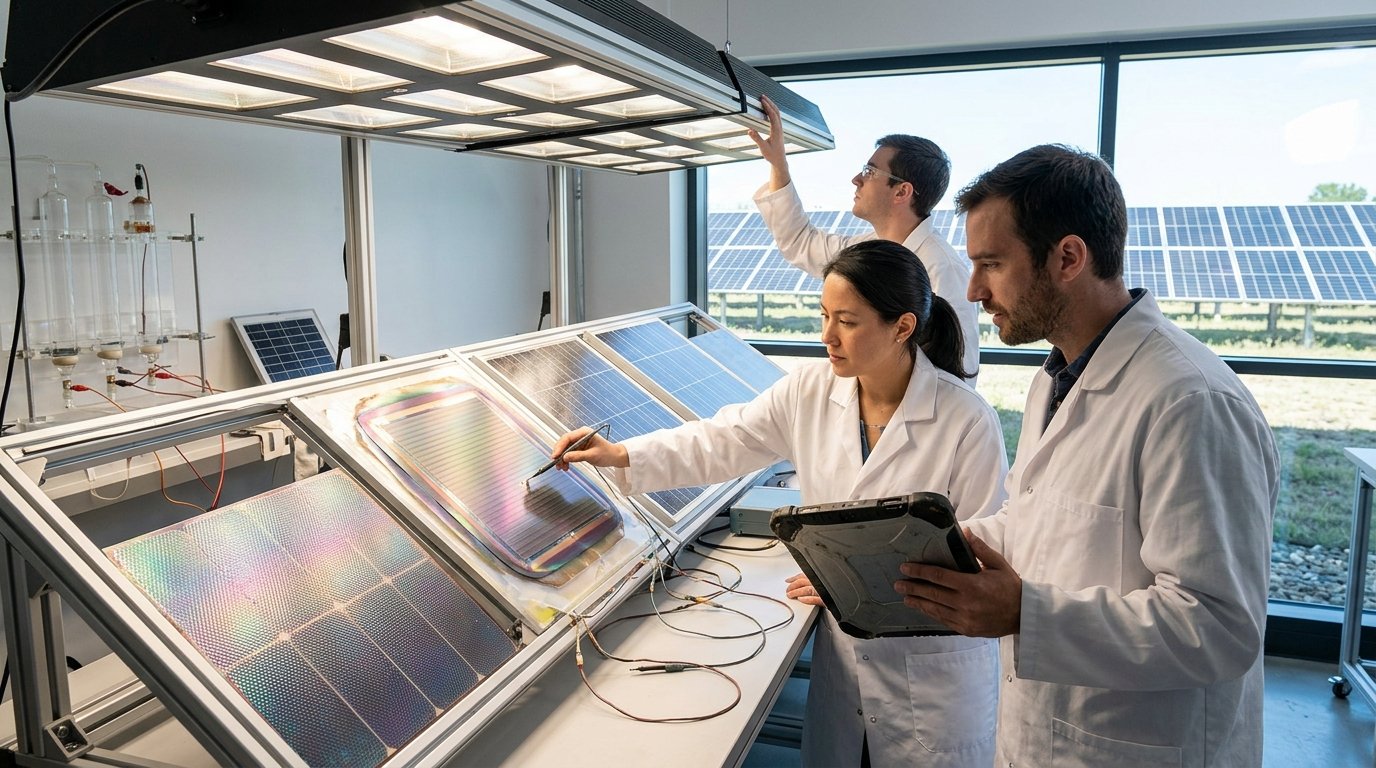
Solar panel efficiency refers to how much sunlight hitting a panel actually gets converted into usable electricity. Standard panels from a decade ago hovered around 15–17%. Today, some panels breach the 24–26% range and lab prototypes are pushing past 30%.
That might sound like a small jump in numbers, but in real terms? It means fewer panels to power the same home, lower installation costs, and more energy output per square metre of roof. For businesses, industries, and even remote off-grid setups, this is a game-changer
The Tech Shifts Driving Better Solar Performance
Perovskite — The Material Shaking Up Solar Science
For decades, silicon ruled solar. It’s abundant, reliable, and well-understood. But silicon has a ceiling — and researchers found a way around it using perovskite, a class of synthetic crystals with a very particular structure that absorbs light exceptionally well.
What makes perovskite special?
Perovskite cells can be tuned to absorb different parts of the light spectrum, which silicon alone can’t do efficiently. When layered on top of silicon in what’s called a tandem cell, the two materials cover more of the sun’s energy range together than either could alone.
In 2025–2026, perovskite-silicon tandem panels crossed the 33% efficiency threshold in controlled lab settings — a milestone the solar industry had been chasing for years. Commercial versions are still catching up, but they’re no longer a distant dream.
Bifacial Panels — Catching Light You Didn't Know Was There
One of the more elegant improvements in solar panel efficiency is surprisingly straightforward: make panels that absorb light from both sides.
Bifacial panels generate electricity from direct sunlight on the front and reflected light from the ground or surrounding surfaces on the back. In high-albedo environments, think light-coloured rooftops, concrete floors, or snowy surfaces, this can boost energy output by 10–20% with no additional space required.
Why this matters for everyday installations:
- Rooftop systems on light-coloured terraces gain a meaningful energy boost
- Ground-mounted setups in open spaces perform significantly better
- The extra cost of bifacial panels pays back faster given the higher yield
Better Inverters and Energy Storage Are Part of the Equation
Here’s something that often gets overlooked in efficiency conversations: the panel is only one piece of the system.
Even a highly efficient solar panel loses value if the inverter that converts DC to AC power is underperforming, or if excess energy has nowhere to go. In 2026, smart hybrid inverters paired with advanced lithium and lithium iron phosphate (LiFePO4) batteries have dramatically improved how much of that generated power actually reaches your appliances.
The real-world efficiency chain looks like this:
Sunlight → Solar Panel → Inverter → Battery Storage → Your Devices
Each step in this chain has improved. Modern inverters operate at 97–99% conversion efficiency, and batteries now retain charge with far less degradation over time. Together, these improvements mean your actual electricity savings are noticeably higher than older systems would deliver.
Better Inverters and Energy Storage Are Part of the Equation
Dust, bird droppings, and grime are silent killers of solar panel efficiency. Studies consistently show that dirty panels lose 5–25% of their output depending on the environment — and in dusty regions like much of India, that number leans toward the higher end.
The solution in 2026? Hydrophobic and anti-soiling nano-coatings applied to the panel surface. These coatings repel water and dust, making it harder for particles to stick and easier for rain (or a quick rinse) to clean the surface automatically.
It’s a passive improvement — no maintenance required — but it keeps panels performing closer to their rated capacity throughout their lifespan.
AI and Monitoring: Knowing When Something's Off
Solar installations are increasingly paired with AI-powered monitoring systems that track performance in real time. These tools flag anomalies: a shaded cell, a faulty connection, an underperforming string before they quietly drain your system’s output for months unnoticed.
This kind of smart oversight ensures that the theoretical efficiency gains from better panel materials actually translate into real savings on your energy bill. Predictive maintenance also extends system lifespan, improving the return on investment significantly.
What This Means If You're Considering Solar in 2026
The science is advancing fast, but the practical takeaway is simple:
- Solar panels today produce more per panel than ever before
- Storage solutions have improved, meaning you keep more of what you generate
- System costs have dropped even as performance has risen
- Smart energy management makes the whole system work harder for you
Whether it’s a residential rooftop setup, a commercial installation, or an off-grid backup system, the fundamentals of a well-designed solar + storage system now deliver results that were out of reach just five years ago.
For anyone exploring reliable solar products, inverters, UPS systems, and battery storage solutions suited to Indian conditions, a good starting point worth checking out.
Conclusion
Solar panel efficiency in 2026 isn’t just a technical stat — it’s the reason solar energy has become a genuinely smart financial decision for homes and businesses alike. From perovskite tandem cells to AI-driven monitoring and smarter storage, every layer of the solar ecosystem has leveled up.
The bottom line? If you installed solar three or more years ago, the difference in today’s systems is real and measurable. And if you haven’t made the switch yet, the technology has never been more mature or cost-effective.
If you’re ready to explore what a modern solar setup looks like panels, batteries, UPS systems and all, discovering your solar energy options is the first step toward cutting energy costs for good