
Solar power is no longer a luxury — it’s a smart, long-term decision for millions of homeowners across India. But before you make the switch, there’s one question you’ll face early on: Should you go on-grid or off-grid? These are two very different ways of using solar energy, and picking the wrong one could cost you more than you planned. Let’s break it down simply.
TABLE OF CONTENT
What Exactly Are Solar Systems?
How It Works
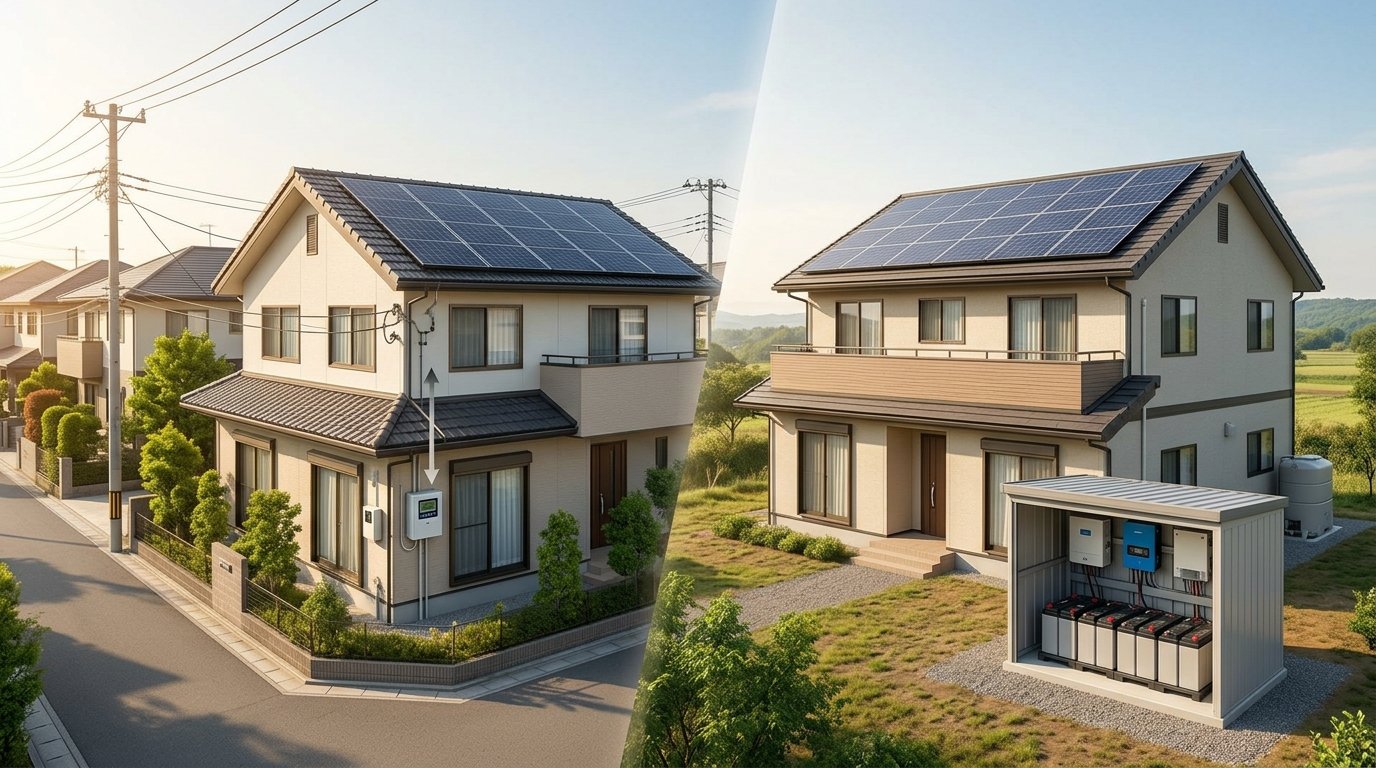
An on-grid solar system (also called a grid-tied system) is directly connected to your local electricity grid. Your panels generate power during the day, and whatever your home doesn’t use gets sent back to the grid. In return, your electricity provider credits you for that surplus — this is what’s known as net metering.
The Pros of Going On-Grid
- Lower upfront cost — No need for batteries, which makes installation significantly cheaper
- Net metering benefits — Earn credits on your electricity bill for the extra power you send back
- Minimal maintenance — Fewer components means fewer things to worry about
- Ideal for urban homes — If you already have a stable grid connection, this fits seamlessly
The One Big Catch
On-grid solar systems do not work during power outages. Since they’re wired to the grid, they automatically shut off when the grid goes down — this is a safety feature to protect lineworkers. So if you live in an area with frequent power cuts, an on-grid system alone may leave you in the dark.
Off-Grid Solar Systems — Full Independence, Full Responsibility
How It Works
Off-grid solar systems operate completely independently of the electricity grid. They store surplus solar energy in battery banks, which power your home at night or on cloudy days. No grid. No dependency. No outages affecting you.
Why Some Homeowners Choose Off-Grid
- Complete energy independence — Perfect for rural areas, remote locations, or frequent power-cut zones
- No electricity bills — Once installed, your energy is free
- Reliable backup — Batteries keep your home powered through the night and during grid failures
What to Consider Before Going Off-Grid
Off-grid solar systems come with higher initial costs due to battery storage requirements. Batteries need periodic maintenance and eventual replacement (typically every 5–10 years). You also need to carefully plan your system capacity — if you install too little, you may run out of power on heavy-use days.
On-Grid vs Off-Grid Solar System Comparison
Feature | On-Grid | Off-Grid |
Grid connection | Yes | No |
Battery required | No | Yes |
Works during power cuts | No | Yes |
Initial cost | Lower | Higher |
Electricity bills | Reduced | Near zero |
Best for | Urban homes | Rural/remote homes |
Net metering | Yes | No |
Is There a Middle Ground? Meet the Hybrid Solar System
The Best of Both Worlds
If you can’t decide between the two, a hybrid solar system might be your answer. Hybrid systems stay connected to the grid and have battery storage. During the day, solar panels power your home. Surplus energy charges your batteries. At night or during power cuts, batteries take over. And if batteries run low, the grid kicks in as backup.
Hybrid solar systems are becoming increasingly popular in cities and towns across India, especially where power cuts still occur but grid connectivity is available.
Which Solar System Is Right for Your Home?
Choose On-Grid If…
- You live in a city with a stable electricity supply
- You want lower installation costs
- You want to reduce your monthly electricity bills
Choose Off-Grid If…
- You’re in a rural or remote area with unreliable or no grid access
- You want zero dependence on electricity providers
- You’re willing to invest more upfront for long-term savings
Choose Hybrid If…
- You experience frequent power cuts but still have grid access
- You want energy security without fully disconnecting from the grid
- You’re planning a long-term solar investment with future scalability
Conclusion
Choosing between on-grid and off-grid solar systems doesn’t have to be complicated. The right choice depends on where you live, how much power you use, and how much energy independence you want. What remains constant is this: solar energy is one of the smartest investments you can make for your home today.
If you’re ready to explore the right solar setup for your needs from panels and inverters to batteries and UPS systems the full range of solar power solutions is just a click away.