
Which Solar Battery Is Actually Worth Your Money?
If you’ve been thinking about switching to solar or upgrading your home energy setup, you’ve probably hit one big question: which solar battery should I go with? There are plenty of options out there, and every brand claims to be the best. But let’s be honest — most people just want to know what works reliably, lasts long, and doesn’t drain their savings faster than it charges.
This guide breaks it all down without the jargon. Whether you’re a first-time buyer or looking to upgrade, you’ll walk away knowing exactly what to look for.
TABLE OF CONTENT
- Which Solar Battery Is Actually Worth Your Money?
- Why the Solar Battery You Pick Really Matters
- The Big Names in Home Solar Battery Storage — What Sets Them Apart
- Quick Comparison Table
- 3 Things Nobody Tells You Before Buying a Solar Battery
- How to Choose the Right Solar Battery for Your Home
- Conclusion — Make a Decision You Won’t Regret
- Frequently Asked Questions
Why the Solar Battery You Pick Really Matters
Your solar panel is only half the story. Without the right solar battery, all that energy your panels collect during the day goes to waste when the sun goes down. A good battery keeps your lights on, your fans running, and your appliances humming — even during a power cut.
The wrong one? You’ll be calling for a replacement sooner than you think.
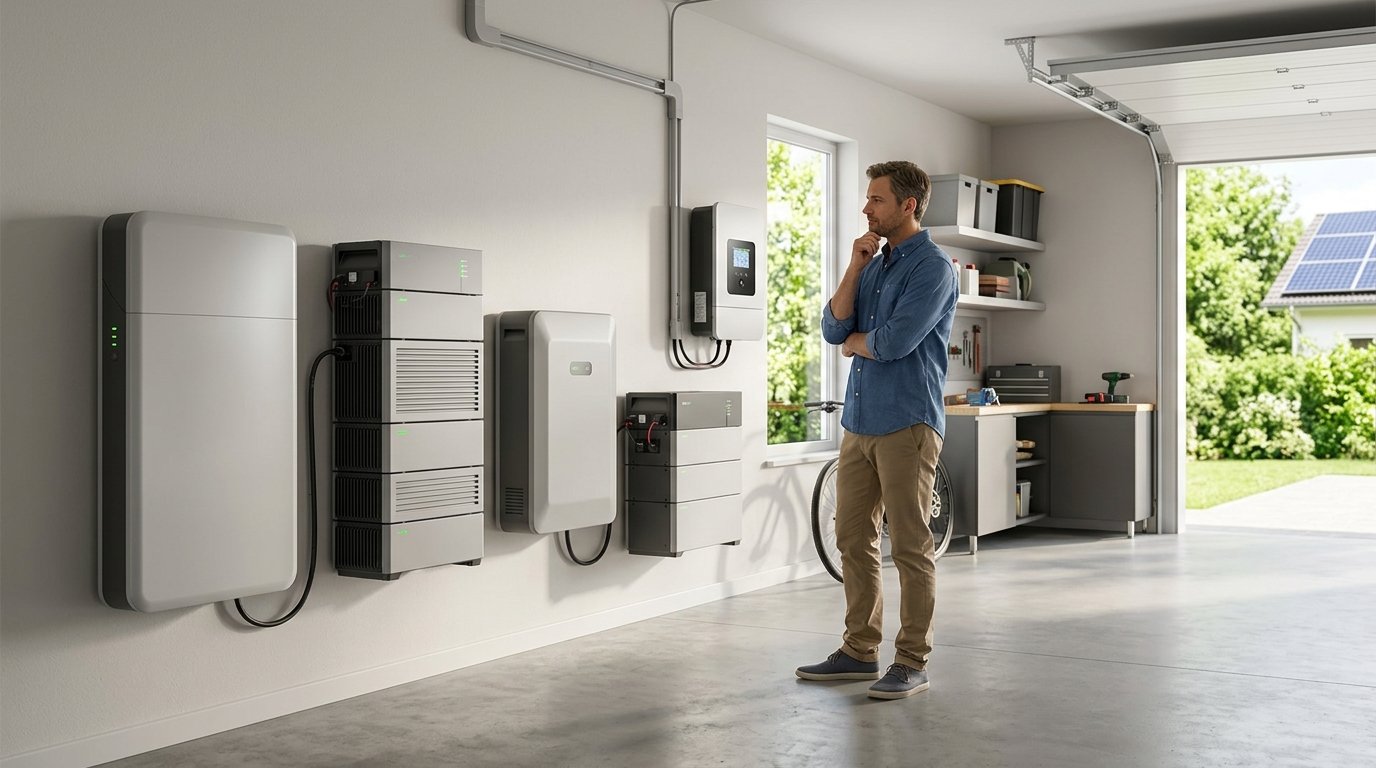
The Big Names in Home Solar Battery Storage — What Sets Them Apart
Lithium Iron Phosphate (LFP) Batteries — The Crowd Favourite
LFP batteries have become the go-to for homeowners, and for good reason. They’re safer than older lithium chemistries, handle heat better (which matters a lot in Indian climates), and can last anywhere from 3,000 to 6,000 charge cycles. That’s roughly 8–15 years of solid use.
Best for: Families who need daily, reliable solar battery backup and want low maintenance.
Watch out for: Higher upfront cost compared to traditional lead-acid options.
AGM (Absorbent Glass Mat) Batteries — The Budget-Friendly Middle Ground
AGM batteries sit between old-school flooded lead-acid and modern lithium. They’re sealed, spill-proof, and don’t need watering like traditional batteries. Their charge and discharge rates are decent, and they handle irregular charging from solar panels reasonably well.
Best for: Homeowners who want a solar battery upgrade without a big investment.
Watch out for: Shorter lifespan compared to LFP — typically 500 to 1,000 cycles.
Gel Batteries — Steady and Slow
Gel batteries are similar to AGM but use a gel electrolyte that makes them even more resistant to deep discharges. They work quietly, don’t emit fumes, and perform well in low-maintenance setups.
Best for: Off-grid solar setups where the battery sits unused for days at a time.
Watch out for: They charge slowly and can’t handle high current loads — not ideal for homes with heavy appliances.
Tubular Lead-Acid Batteries — Tried, Tested, and Still Standing
Tubular batteries have been the backbone of solar energy storage in India for years. They’re affordable, widely available, and serviceable locally. When maintained properly, a good tubular battery can run for 4–6 years.
Best for: Budget-conscious buyers who don’t mind occasional maintenance.
Watch out for: They need water top-ups, ventilation space, and regular checks. Not ideal for apartments.
Quick Comparison Table
Feature | LFP Lithium | AGM | Gel | Tubular Lead-Acid |
Lifespan (cycles) | 3,000–6,000 | 500–1,000 | 500–1,000 | 1,200–1,500 |
Maintenance | None | Minimal | None | Regular |
Heat Tolerance | Excellent | Good | Moderate | Moderate |
Depth of Discharge | 80–90% | 50–60% | 50–60% | 50–60% |
Cost | Higher | Moderate | Moderate | Low |
Best Use | Daily home backup | Medium use | Off-grid | Budget homes |
3 Things Nobody Tells You Before Buying a Solar Battery
1. Capacity Numbers Can Be Misleading
A 150Ah battery doesn’t always give you 150Ah of usable energy. Tubular and AGM batteries are usually recommended at 50% depth of discharge (DoD) meaning you’re only safely using half the capacity. LFP solar batteries, on the other hand, let you use up to 80–90% without damage. So a 100Ah LFP battery might actually serve you better than a 150Ah AGM.
2. Heat Is Your Battery's Worst Enemy
Most home batteries are installed in utility rooms, garages, or outdoors places that get very hot in Indian summers. LFP chemistry handles this significantly better. If your installation spot doesn’t have ventilation, the type of solar battery you choose becomes even more critical.
3. Warranty Terms Vary a Lot
Some brands offer a 2-year warranty; others go up to 10 years. But the fine print matters — check whether the warranty covers full replacement or just a pro-rated discount on a new unit. A longer warranty with real coverage is worth more than a cheap battery with a hollow guarantee.
How to Choose the Right Solar Battery for Your Home
Here’s a simple framework to help you decide:
Step 1 — Calculate your daily power needs. Add up the wattage of the appliances you want to run during a power cut and for how many hours.
Step 2 — Decide your budget range. Lithium is worth the investment if you plan to use solar energy daily. If it’s backup-only and infrequent, a well-maintained tubular battery may be sufficient.
Step 3 — Check the installation space. Lithium batteries are compact and can go almost anywhere. Lead-acid needs ventilation and level flooring.
Step 4 — Look at the total cost of ownership. A cheaper solar battery that lasts 3 years vs. a premium one that lasts 12 years — do the math over a decade.
Conclusion — Make a Decision You Won't Regret
The right solar battery for your home isn’t the most expensive one, it’s the one that fits your usage pattern, installation space, and long-term budget. LFP lithium leads the pack for daily users who want reliability and minimal hassle. Tubular batteries still hold up for occasional backup needs on a tighter budget. AGM and Gel fill the gaps in between.
Whatever you choose, don’t rush it. A solar battery is a long-term investment that affects how well your entire solar system performs. If you want reliable guidance and quality products to match, explore your options from solar batteries to complete home energy solutions, it’s a solid place to start your journey.