Why Businesses Are Making the Switch to Solar
Energy bills are one of the biggest recurring costs for any industrial or commercial setup. And yet, most businesses are still paying full price for grid electricity when the sun, a completely free energy source, is shining right outside.
A well-designed solar panel system doesn’t just cut costs. It gives your business energy independence, reduces carbon footprint, and delivers a solid return on investment over time. Whether you run a warehouse, a factory, a shopping complex, or an office building, solar is no longer a “maybe someday” decision. It’s a smart business move being made right now, across industries.
TABLE OF CONTENT
- Why Businesses Are Making the Switch to Solar
- What Makes a Solar Panel System “Commercial Grade”?
- Types of Solar Panel Systems for Commercial Use
- Key Components That Actually Matter
- Real Numbers — What Can Businesses Actually Save?
- What to Check Before You Buy — 5 Practical Tips
- Industries That Benefit the Most from Solar
- Conclusion: The Right Time to Go Solar Is Now
- Frequently Asked Questions (FAQs)
What Makes a Solar Panel System "Commercial Grade"?
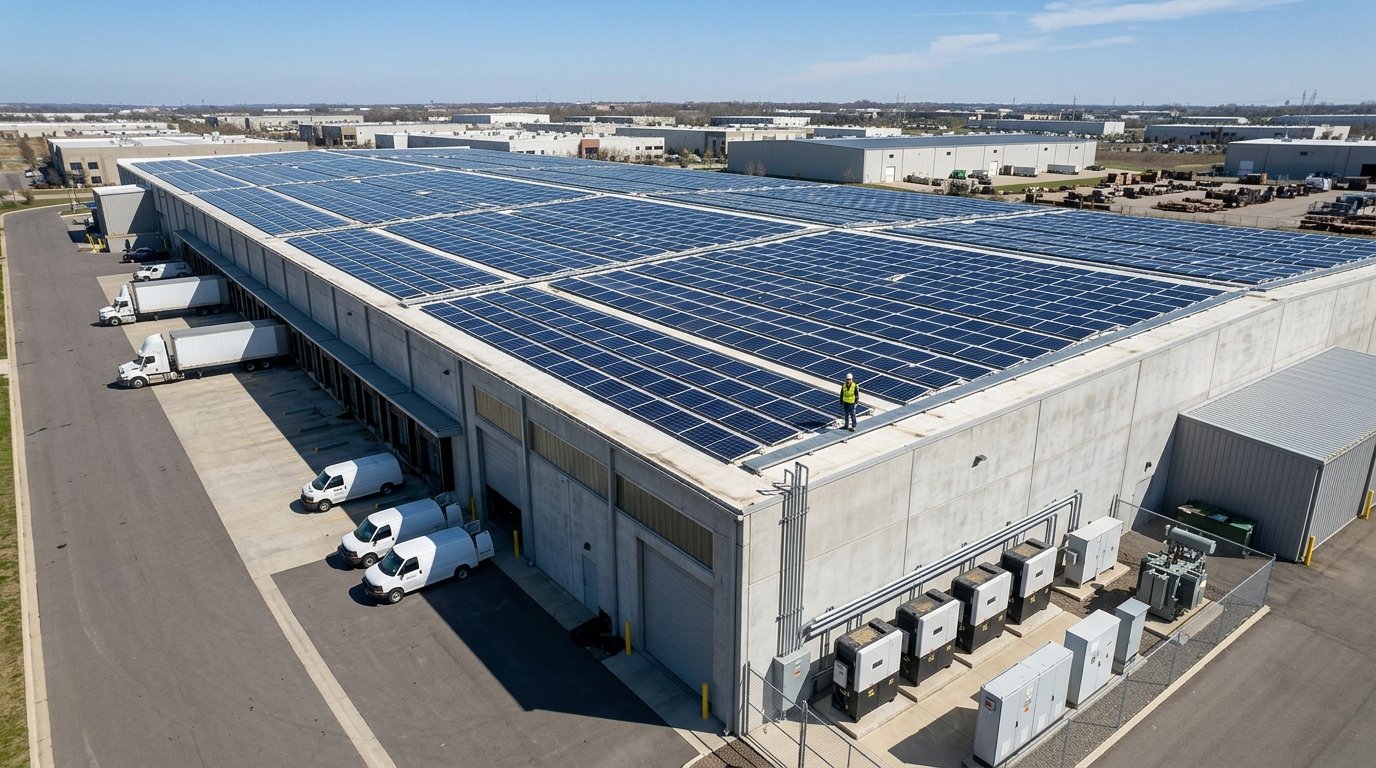
Not all solar setups are built the same. A rooftop system for a home looks very different from what powers a manufacturing plant or a large retail store.
Scale and Capacity
Commercial and industrial solar panel systems are typically designed for higher energy output anywhere from 10 kW to several megawatts, depending on the facility size. While a residential setup might have 10–20 panels, a commercial property could need hundreds.
Durability and Performance Under Load
Industrial environments demand more. Systems used in factories, cold storage units, or processing plants need to handle consistent, high-load energy demands. This means panels with better efficiency ratings, robust inverters, and battery backup systems that don’t blink during peak production hours.
Integration with Existing Infrastructure
A commercial solar panel system must work alongside your existing electrical setup, not against it. This includes compatibility with three-phase power systems, proper grid-tie configurations, and sometimes off-grid or hybrid modes for uninterrupted operations.
Types of Solar Panel Systems for Commercial Use
On-Grid (Grid-Tied) Systems
These are connected directly to the utility grid. Surplus electricity generated can be fed back to the grid (net metering), which helps offset your electricity bill further. On-grid systems are the most common choice for offices and commercial spaces with stable grid access.
Best for: IT parks, office buildings, retail outlets, educational institutions
Off-Grid Systems
These operate completely independent of the grid. They rely on battery storage to provide power when the sun isn’t shining. Ideal for remote industrial sites or facilities in areas with frequent power outages.
Best for: Remote factories, agricultural processing units, telecom towers
Hybrid Solar Systems
The best of both worlds — hybrid systems combine grid connectivity with battery backup. If the grid goes down, your batteries kick in. If your batteries are full, excess power goes to the grid. This is increasingly the go-to choice for businesses that can’t afford downtime.
Best for: Hospitals, data centers, manufacturing units, cold chain businesses
Key Components That Actually Matter
When you’re investing in a commercial solar panel system, it’s not just about the panels. Here’s what the full system looks like:
- Solar Panels — Monocrystalline panels offer the highest efficiency (18–22%) and are ideal for commercial use where roof space is limited but energy demand is high.
- Inverters — These convert DC power from the panels into usable AC power. For commercial use, string inverters or central inverters are common, while microinverters are used for complex roof layouts.
- Batteries / UPS — Storage units store excess energy for use during nights or outages. Lithium-ion batteries are the current industry standard for reliability and longevity.
- Mounting Structures — Rooftop, ground-mounted, or carport-style structures, depending on available space.
- Monitoring Systems — Smart monitoring tools let you track energy generation and consumption in real time.
Real Numbers — What Can Businesses Actually Save?
Let’s talk about money, because that’s what drives business decisions.
A medium-sized commercial facility consuming around 10,000 units (kWh) per month can save anywhere between ₹60,000 to ₹1,20,000 per month depending on the tariff rate and system size. Over 25 years (the standard life of most solar panels), this adds up to crores in savings.
Payback Period
Most commercial solar panel systems have a payback period of 3 to 6 years. After that, the electricity is essentially free for the remaining life of the system — which is 20 to 25 years.
Government Incentives
In India, commercial and industrial solar projects are eligible for:
- Accelerated Depreciation — up to 40% in the first year, which significantly reduces tax liability
- GST benefits and state-level subsidies in select regions
- Net metering policies across most states
These incentives make the upfront investment far more manageable.
What to Check Before You Buy — 5 Practical Tips
Shopping for a solar panel system without knowing what to look for is a recipe for overspending or underperforming. Here’s how to make a smart decision:
- Assess Your Load Profile First — Know your monthly consumption, peak demand hours, and critical loads. This determines the system size you actually need.
- Don’t Just Compare Panel Wattage — A 400W panel from a reliable manufacturer will outperform a 450W panel from an unknown brand. Look at efficiency ratings, degradation rates, and warranty terms (25-year performance warranty is standard).
- Inverter Quality Is Non-Negotiable — Cheap inverters fail faster. Invest in a reputed brand with remote monitoring capability.
- Battery Chemistry Matters — If you’re going hybrid or off-grid, lithium-ion batteries (LiFePO4 specifically) offer better cycle life and safety over lead-acid alternatives.
- Check the Installer’s Track Record — A poorly installed solar panel system loses efficiency fast. Ask for past project references, especially in the commercial/industrial segment.
Industries That Benefit the Most from Solar
Solar isn’t a one-size-fits-all solution, but these sectors consistently see the strongest ROI:
- Textile and Garment Manufacturing — High daytime energy consumption aligns perfectly with solar generation hours.
- Cold Storage and Food Processing — Continuous load demands paired with rising electricity costs make solar + battery the ideal combo.
- Retail Chains and Malls — Large rooftop areas, high lighting and HVAC loads.
- Educational Institutions — Daytime-heavy usage with significant open roof space.
- IT and Tech Parks — Stable, round-the-clock load with strong sustainability goals.
Conclusion: The Right Time to Go Solar Is Now
The cost of solar technology has dropped by over 80% in the last decade. The cost of grid electricity? It keeps climbing. For industrial and commercial businesses, this gap is only going to widen and every month without solar is money left on the table.
Whether you’re considering a rooftop setup for your office or a large-scale installation for your production facility, understanding what goes into a quality solar panel system helps you make a choice you won’t regret.
Explore your options, find reliable UPS, batteries, and solar solutions tailored for commercial needs.