Going solar is one of the smartest moves a homeowner can make today. But here’s the truth: most people miss that your solar panels are only as good as the battery backing them up. A weak or mismatched solar inverter battery can quietly drain your savings, leave you in the dark during outages, and shorten the life of your entire solar system.
So before you invest, it pays to know exactly what to look for. This guide breaks it all down simply, clearly, and without the jargon.
TABLE OF CONTENT
- Why the Battery Is the Heart of Your Solar System
- 6 Key Features to Check Before Buying a Solar Inverter Battery
- Bonus Features Worth Looking For
- Quick Comparison — Lithium-Ion vs. Lead-Acid Solar Battery
- Common Mistakes Homeowners Make When Choosing a Solar Battery
- Conclusion
- FAQs – Solar Inverter Batteries Answered Simply
Why the Battery Is the Heart of Your Solar System
Solar panels generate power when the sun shines. But what happens at night? Or on a cloudy day? Or during a power cut?
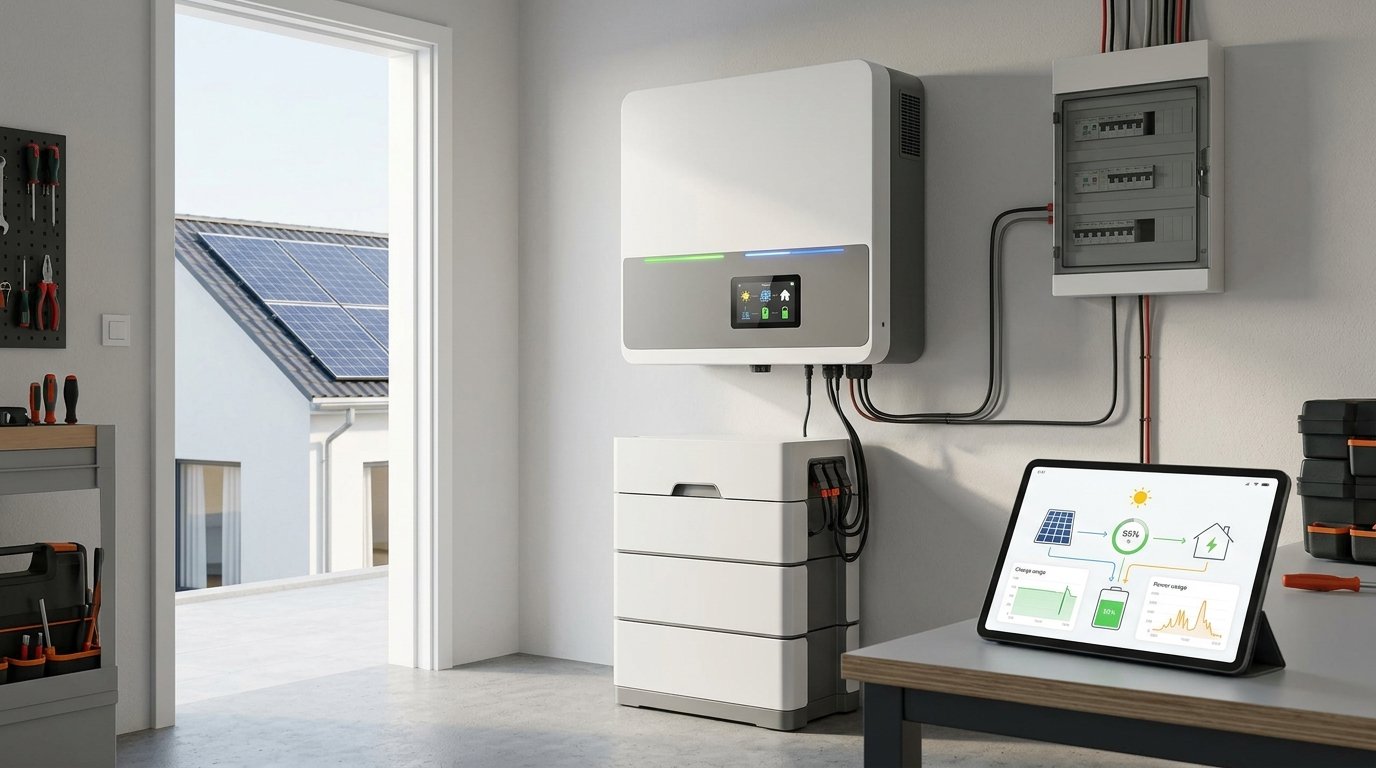
That’s where your solar inverter battery steps in. It stores the surplus energy your panels generate and releases it when you actually need it. Without a quality battery, your solar energy investment is incomplete; you’d still depend heavily on the grid.
The right battery doesn’t just store power. It determines how long your backup lasts, how efficiently your inverter battery performs, and how much you truly save on electricity bills over the years.
6 Key Features to Check Before Buying a Solar Inverter Battery
1. Battery Capacity (kWh) — How Much Can It Actually Store?
Capacity is measured in kilowatt-hours (kWh) and tells you how much energy the battery can hold. For a typical Indian home running fan, lights, a refrigerator, and a TV, you’d want at least 3–5 kWh of usable storage.
What to watch: Don’t confuse total capacity with usable capacity. Most batteries are rated at 80–90% depth of discharge (DoD). A 5 kWh battery with 80% DoD gives you only 4 kWh of usable energy. Always check the usable figure.
2. Battery Type — Lithium-Ion vs. Lead-Acid
This is one of the biggest decisions you’ll make.
Lithium-Ion (Li-ion): Higher upfront cost, but longer lifespan (10–15 years), faster charging, deeper discharge, and minimal maintenance. Ideal if you’re thinking long-term.
Lead-Acid (Tubular/Flat Plate): More affordable initially, widely available, but requires regular maintenance (topping up with distilled water), has a shorter lifespan (3–5 years), and lower efficiency.
For most homeowners investing in solar energy today, lithium-ion is worth the extra spend — it pays back over time.
3. Cycle Life — How Many Charge-Discharge Cycles Will It Last?
Every time a battery charges and discharges, it completes one “cycle.” A battery rated for 3,000 cycles lasts far longer than one rated for 500 cycles.
A lithium-ion solar battery typically offers 3,000–6,000+ cycles. Lead-acid options usually range between 500–1,500 cycles depending on usage and maintenance.
More cycles = longer life = better return on your investment.
4. Compatibility with Your Inverter — Not All Pairs Work Well Together
Your solar inverter battery must be compatible with the inverter you’re using — whether it’s a pure sine wave inverter, a hybrid inverter, or an off-grid system. Mismatched pairing can damage both units and void warranties.
What to check:
- Voltage compatibility (12V, 24V, 48V)
- Charging current ratings
- Whether the inverter supports the specific battery chemistry (Li-ion needs a Battery Management System or BMS-compatible inverter)
When in doubt, consult a qualified solar technology professional before purchasing.
5. Charging Efficiency and Speed
Your solar inverter battery must be compatible with the inverter you’re using — whether it’s a pure sine wave inverter, a hybrid inverter, or an off-grid system. Mismatched pairing can damage both units and void warranties.
What to check:
- Voltage compatibility (12V, 24V, 48V)
- Charging current ratings
- Whether the inverter supports the specific battery chemistry (Li-ion needs a Battery Management System or BMS-compatible inverter)
When in doubt, consult a qualified solar technology professional before purchasing.
6. Safety Certifications and Warranty
A battery is a long-term investment. Never skip this step.
Look for batteries that carry certifications such as:
- BIS (Bureau of Indian Standards) for India-compliant products
- IEC 62133 (international standard for battery safety)
- UN 38.3 (transport and thermal safety)
A warranty of 5 years minimum is standard for quality solar batteries. Premium lithium batteries often carry 8–10-year warranties. A short warranty period is a red flag.
Bonus Features Worth Looking For
Smart Battery Management System (BMS)
A BMS is a built-in digital brain that monitors the battery’s temperature, voltage, and charge level in real time. It prevents overcharging, deep discharge, and overheating, all of which shorten battery life. Recent innovations in solar technology have made smart BMS standard in most modern lithium solar batteries. If yours doesn’t have it, that’s a concern.
Scalability — Can You Add More Batteries Later?
Your energy needs may grow. A modular battery system lets you add more units to expand capacity without replacing everything. This is especially useful for homes planning to add EV charging or additional appliances in the future.
Temperature Tolerance
India’s climate can be extreme. In Karnataka, temperatures can soar in summer and drop significantly in hilly areas. Check the battery’s operating temperature range. Lithium batteries generally handle heat better than lead-acid, but thermal management still matters.
Quick Comparison — Lithium-Ion vs. Lead-Acid Solar Battery
Feature | Lithium-Ion | Lead-Acid |
Lifespan | 10–15 years | 3–5 years |
Maintenance | Zero | Regular water top-ups |
Efficiency | 95–98% | 70–80% |
Depth of Discharge | Up to 90% | 50% (recommended) |
Cost | Higher upfront | Lower upfront |
Best For | Long-term solar investment | Budget-conscious first-time buyers |
Common Mistakes Homeowners Make When Choosing a Solar Battery
Choosing based on price alone: The cheapest battery almost always costs more over time — in replacements, repairs, and wasted energy.
Ignoring compatibility: A great battery paired with the wrong inverter is a disaster waiting to happen.
Overlooking capacity needs: Undersizing your battery means running out of power at exactly the wrong time.
Skipping professional advice: Solar technology has evolved rapidly. Getting expert guidance from a trusted solar energy supplier saves time, money, and headaches.
Conclusion
Choosing the right solar inverter battery isn’t complicated once you know what to look for capacity, battery type, cycle life, compatibility, efficiency, and safety certifications. These six features will guide you to a battery that actually delivers on its promise.
Renewable energy works best when every component is chosen wisely. And the battery is no exception; it’s what keeps your home powered long after the sun sets.
If you’re ready to make the switch or want expert guidance on finding the right energy storage solution for your home, explore reliable solar and UPS solutions trusted by homeowners across Karnataka.